Professional Cosmetics Peptide Supplier | GENOPEP



Palmitoyl Tetrapeptide-20 for Peptide Self Tanner Development
Why This Ingredient Needs a Claim Reset
Palmitoyl Tetrapeptide-20 is attractive for sunless-color products because it gives peptide self-tanners a more technical story than DHA alone. The risk is that this story can easily become too aggressive. Claims around receptor control, skin-defense biology, genome-level support or long-lasting internal barriers move beyond ordinary cosmetic positioning and create evidence expectations that most finished products cannot support.
A more credible article should separate ingredient-background science from finished-product promises. Palmitoyl Tetrapeptide-20 can be introduced as a peptide ingredient connected to pigmentation biology, while consumer-facing claims should stay with visible sunless glow, even-looking tone, gradual color development, hydrated feel and a documented evidence plan.
What the Mechanism Can Responsibly Mean
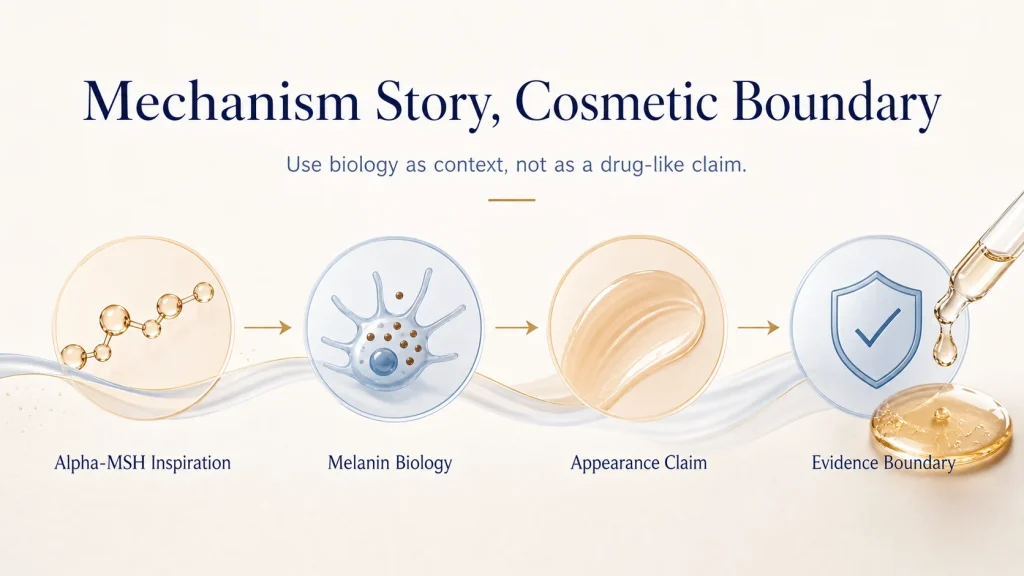
The useful mechanism story is not that a cosmetic product controls skin biology like a drug. The useful story is that pigmentation science helps product developers explain why gradual tone claims need structure, timing and evidence. Alpha-MSH, melanocyte signaling and melanosome transfer can be discussed as background biology, but the article should avoid turning those pathways into direct finished-product action claims.
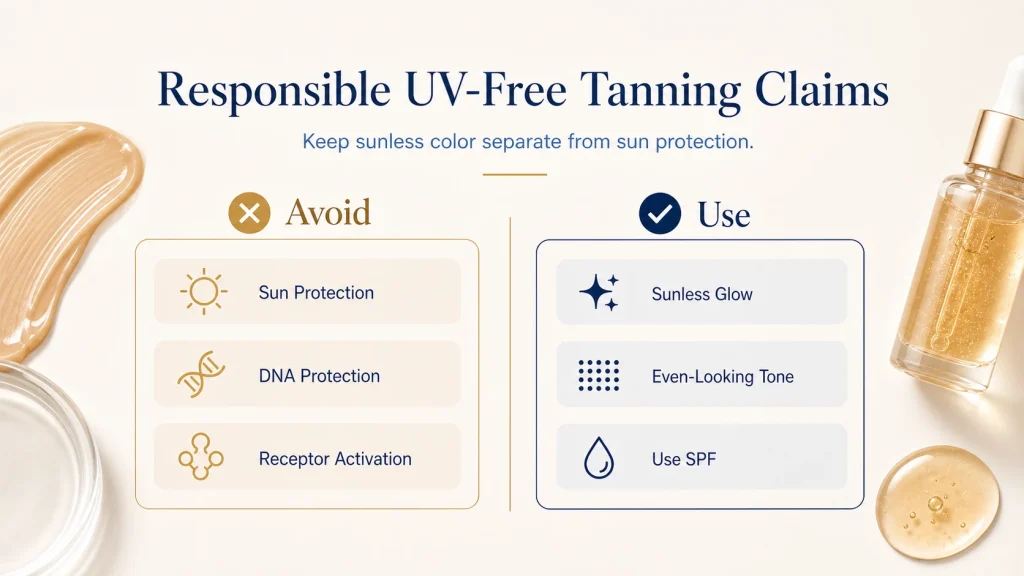
This distinction protects both trust and compliance. A brand can say that a formula is peptide-inspired, designed for gradual sunless tone and supported by appearance-based testing. It should not say that the finished product controls receptors, replaces sun care, supports genetic-level protection or creates an internal UV-defense barrier.
Pairing Palmitoyl Tetrapeptide-20 with DHA
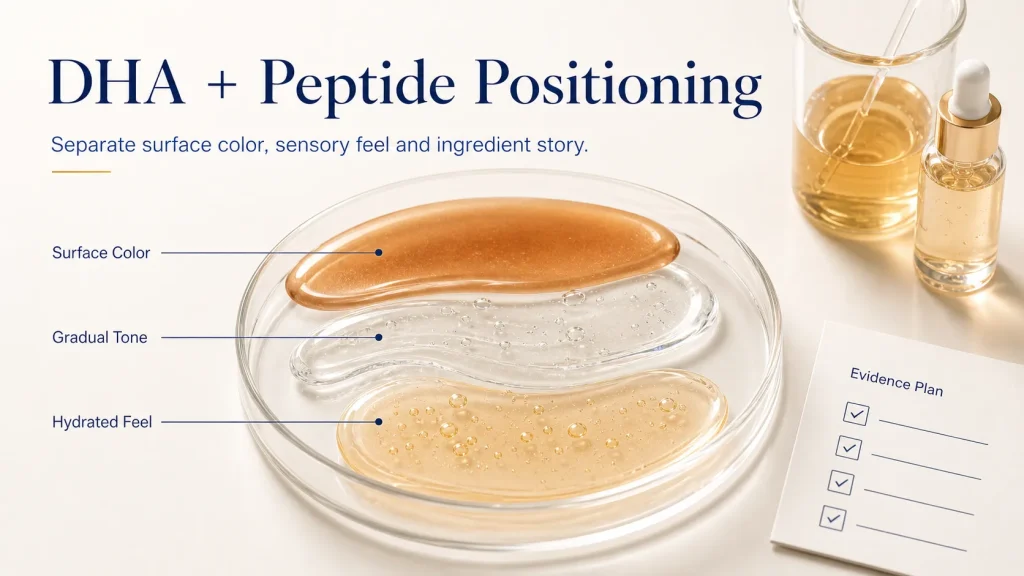
DHA remains the most recognizable technology in sunless tanner development because it creates visible surface color in the outer stratum corneum. That mechanism is different from a peptide-positioning story. DHA should be described as surface color, temporary bronze tone or gradual visible warmth, not as an internal biological process.
Palmitoyl Tetrapeptide-20 can sit beside DHA as an ingredient story for a more advanced product architecture. A practical formula narrative may combine DHA for early surface color, humectants such as hyaluronic acid for application comfort and hydrated feel, and a peptide ingredient for a more technical gradual-tone concept. Each layer needs its own evidence, because one test cannot support every claim.
Regulatory and Documentation Checkpoints
Regulatory status should be handled more carefully than the source draft suggests. An INCI name or an inventory listing is not the same as unlimited claim permission. Before launch, product teams should confirm the exact ingredient identity, local inventory status, supplier safety documentation, recommended use level, impurities profile, formula stability and target-market claim language.
This is especially important for UV-free tanning. The phrase can describe a sunless-color route, but it should not imply that the product gives UV-defense benefits. Finished-product copy should also remind users that sunless color does not replace sunscreen when sun exposure is expected.
What Brands Should Promise
The strongest commercial positioning is not the most dramatic mechanism claim. It is the clearest claim architecture. A responsible peptide self-tanner story can promise visible cosmetic outcomes and define how those outcomes will be measured.
- Consumer promise: sunless glow, even-looking tone, gradual color build and a comfortable hydrated feel.
- Formula story: DHA for surface color, humectants for sensory comfort and Palmitoyl Tetrapeptide-20 for a peptide-inspired gradual-tone concept.
- Evidence plan: colorimetry, visual grading, consumer perception, rub-off, transfer, odor, hydration, compatibility and stability.
- Claim boundary: avoid SPF-substitute, genome-defense, receptor-action and internal-barrier language for ordinary cosmetic products.
Conclusion: A Better Mechanism Story Builds Trust
Palmitoyl Tetrapeptide-20 does not need exaggerated language to be useful. Its value is strongest when it helps a brand build a more sophisticated sunless-tanning concept around peptide ingredients, DHA surface color, hydration benefits and a defined evidence file. The result is a clearer article, a safer claim framework and a product story that formulators, brand owners and regulatory teams can work with.
GENOPEP Development Support GENOPEP supports skincare brands developing peptide self-tanner and gradual-tone concepts with cosmetic peptide ingredients, formula-positioning guidance and technical documentation. Development support can be aligned with DHA systems, hydration formats, stability testing and responsible claim boundaries.
References
1. U.S. Food and Drug Administration. Sunless Tanners & Bronzers. https://www.fda.gov/cosmetics/cosmetic-products/sunless-tanners-bronzers
2. García-Borrón J.C., Sánchez-Laorden B.L., Jiménez-Cervantes C. Melanocortin-1 receptor structure and functional regulation. Pigment Cell Research. 2005;18(6):393-410.
3. Busca R., Ballotti R. Cyclic AMP a key messenger in the regulation of skin pigmentation. Pigment Cell Research. 2000;13(2):60-69.
4. D’Orazio J.A., Jarrett S., Amaro-Ortiz A., Scott T. UV radiation and the skin. International Journal of Molecular Sciences. 2013;14(6):12222-12248. https://doi.org/10.3390/ijms140612222
5. Marks M.S., Seabra M.C. The melanosome: membrane dynamics in black and white. Nature Reviews Molecular Cell Biology. 2001. https://doi.org/10.1038/35096009