Professional Cosmetics Peptide Supplier | GENOPEP



Company News
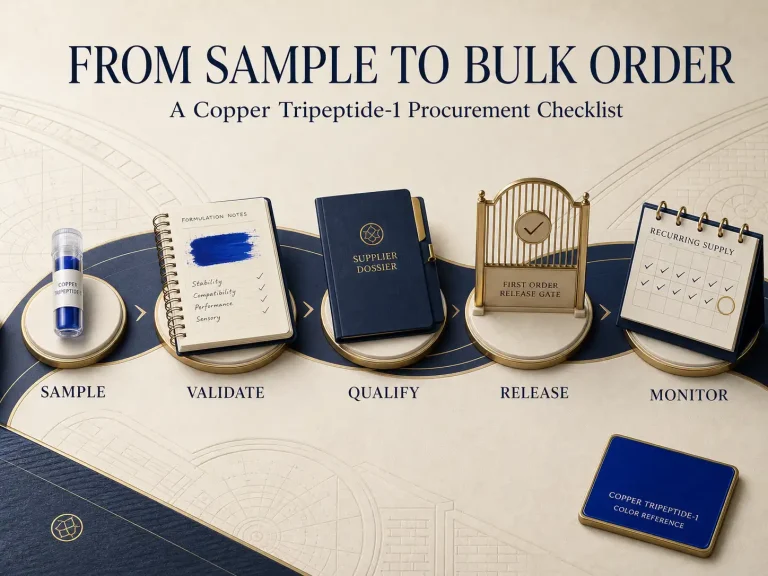
From Sample to Bulk Order: A Copper Tripeptide-1 Procurement Checklist
A Copper Tripeptide-1 procurement checklist should connect five decisions: define the intended commercial item before requesting a sample; validate that sample in the actual formula and package; qualify the supplier and documents;…
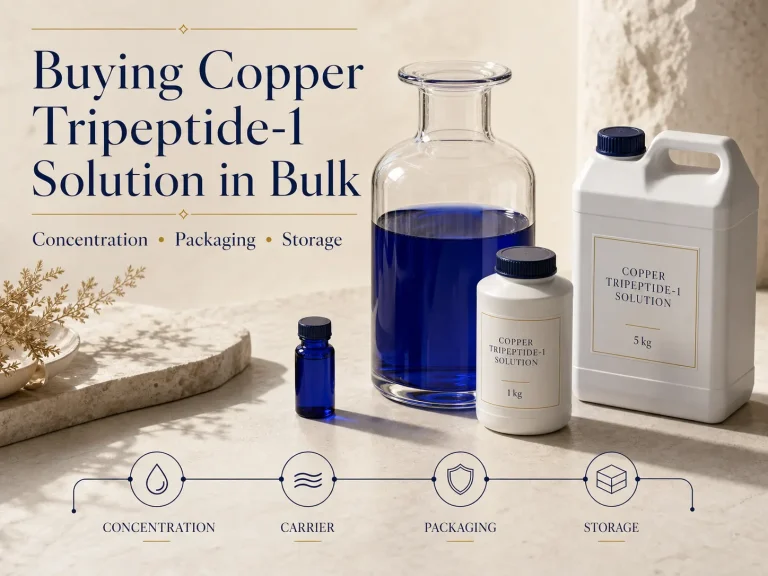
Buying Copper Tripeptide-1 Solution in Bulk: Concentration, Packaging, and Storage Questions
When buying Copper Tripeptide-1 solution in bulk, do not compare offers by kilograms alone. Confirm the declared peptide content and its basis, complete carrier and preservation system, nominal active-equivalent quantity, batch acceptance…
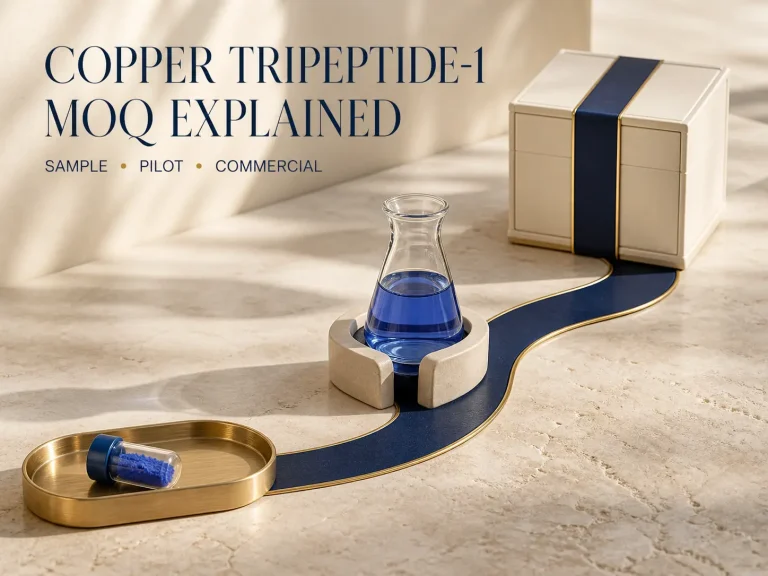
Copper Tripeptide-1 MOQ Explained: Matching Order Size to Your Development Stage
Copper Tripeptide-1 MOQ is not a universal property of the ingredient. It is a commercial condition attached to a defined form, specification, package, service scope and production route. The right order size…
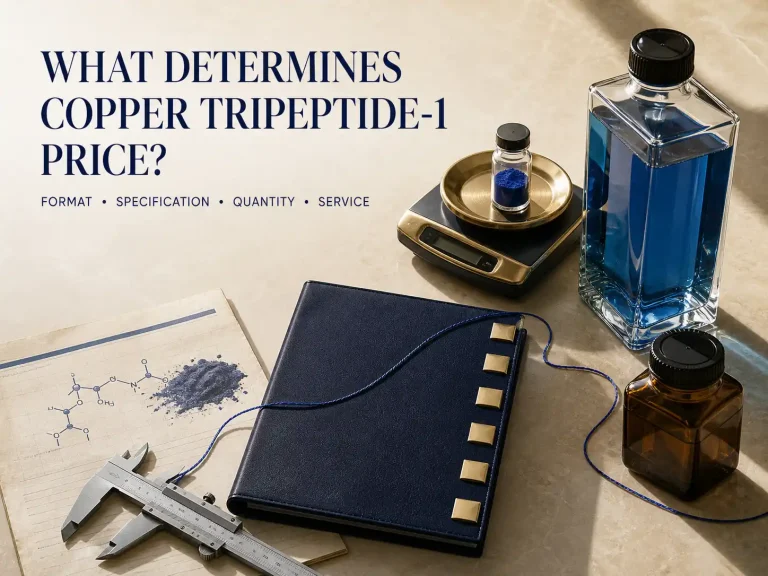
What Determines Copper Tripeptide-1 Price? Format, Specification, Quantity, and Service
Copper Tripeptide-1 price is determined by more than the ingredient name. A comparable supplier quote must define the material form, specification basis, active or peptide content, order quantity, document and testing scope,…

What Happens to Collagen as Skin Ages—and Can Skincare Help?
Collagen changes with age in three connected ways: skin produces less new collagen, existing fibers become increasingly fragmented and disorganized, and the altered dermal matrix gives fibroblasts a weaker mechanical environment for…
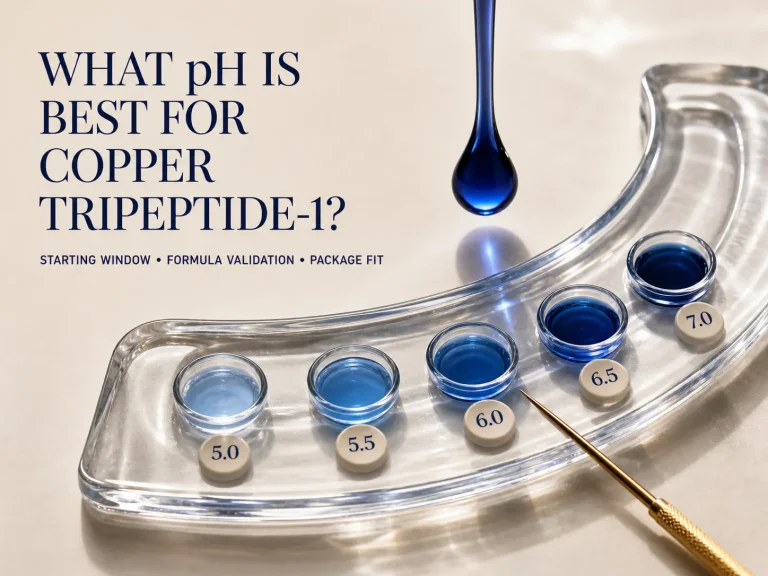
What pH Is Best for Copper Tripeptide-1? Stability and Formula-Validation Considerations
There is no universal best pH for Copper Tripeptide-1 in every cosmetic formula. The current Skinkind Cosmetics product page identifies pH 5.0-7.0 as the preferred range, while a published GHK-Cu preformulation study…
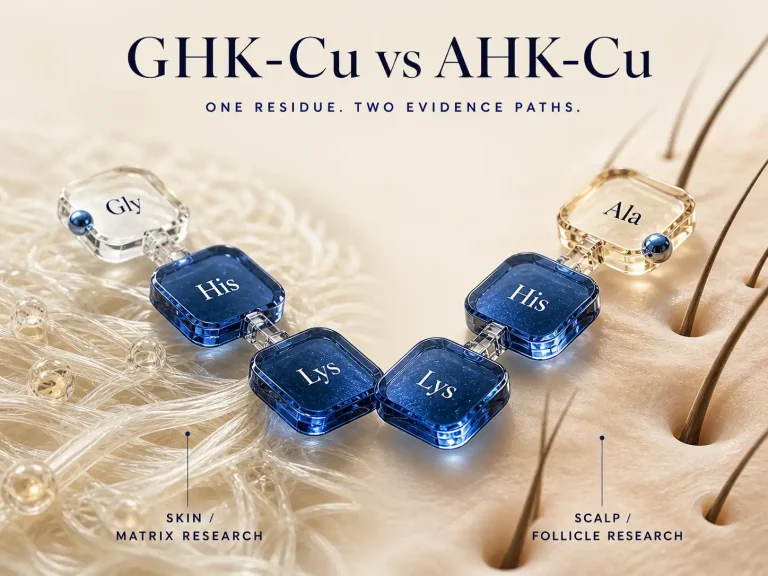
GHK-Cu vs AHK-Cu: What Changes, What the Evidence Supports, and How Formulators Should Choose
GHK-Cu and AHK-Cu are related copper-bound tripeptides, but they are not interchangeable names for one ingredient. GHK-Cu contains glycine-histidine-lysine, whereas AHK-Cu contains alanine-histidine-lysine. GHK-Cu has the broader published record in skin and…
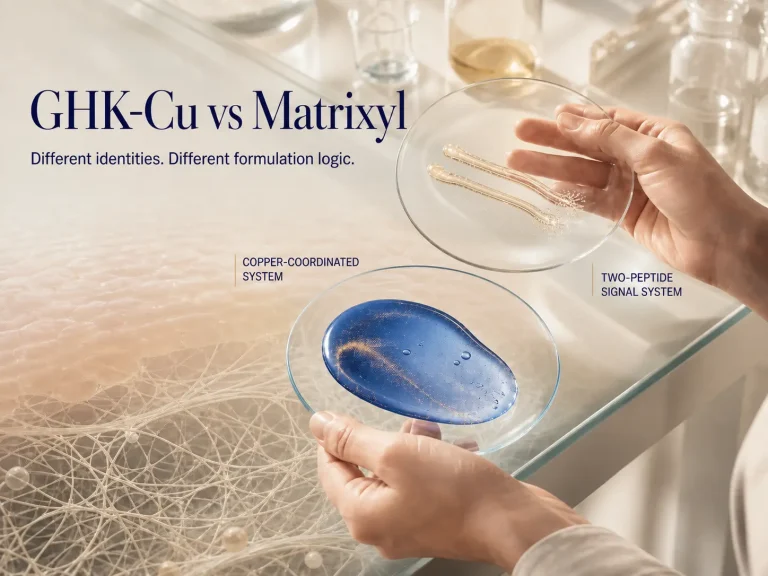
GHK-Cu vs Matrixyl: How Copper Peptides and Signal-Peptide Systems Differ
GHK-Cu vs Matrixyl is not a comparison between two equivalent single peptides. GHK-Cu is a defined copper complex of the tripeptide Gly-His-Lys and is listed in cosmetics as Copper Tripeptide-1. Matrixyl is…
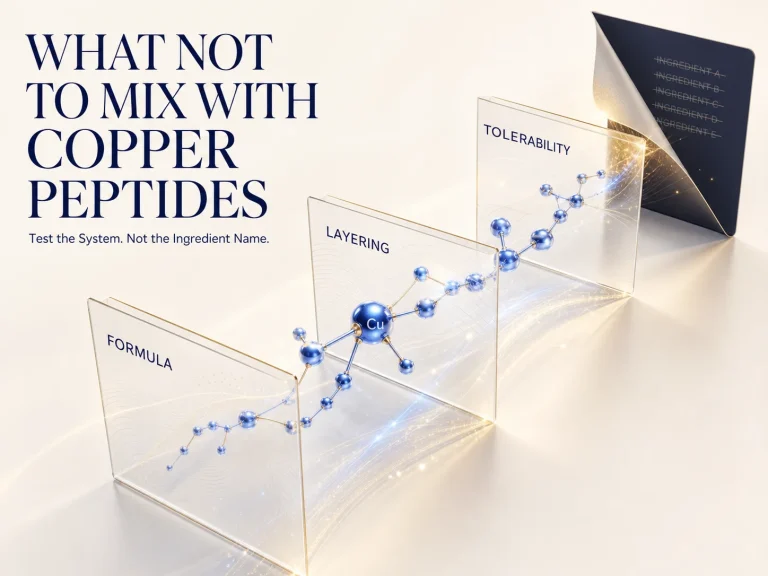
What Should You Not Mix with Copper Peptides? Formula Compatibility Evidence vs Skincare Myths
What not to mix with copper peptides cannot be answered by a universal blacklist. For Copper Tripeptide-1/GHK-Cu, the most defensible formula-level cautions concern strong oxidative or reductive conditions, extreme pH, and ingredients…
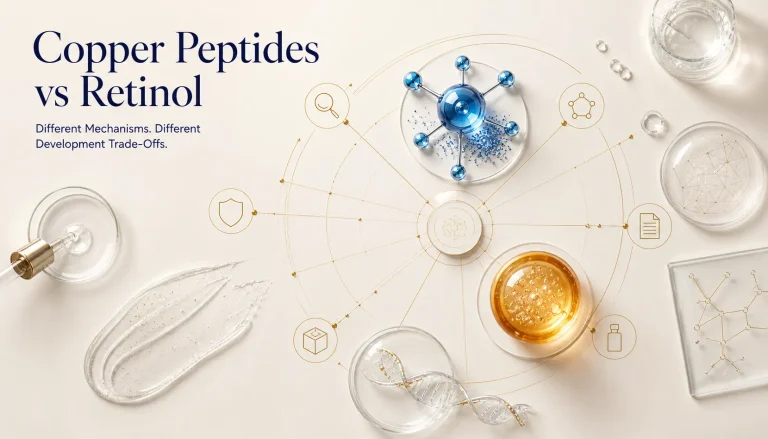
Copper Peptides vs Retinol: Mechanisms, Benefits, and Product-Development Trade-Offs
Copper peptides and retinol are not interchangeable anti-aging ingredients. Retinol has the stronger direct clinical evidence base for visible photoaging endpoints, while Copper Tripeptide-1 is supported mainly by ingredient-level, cell, preclinical, safety,…
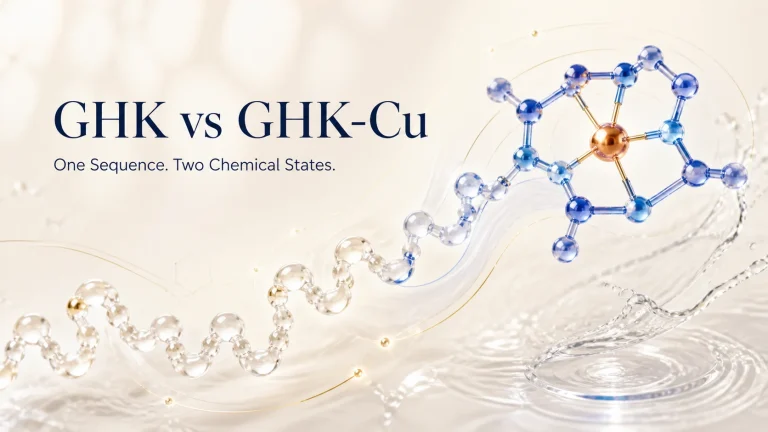
GHK vs GHK-Cu: What Changes When the Tripeptide Binds Copper?
GHK is the tripeptide Gly-His-Lys, while GHK-Cu is its copper complex, identified in cosmetics as Copper Tripeptide-1. When GHK binds copper, the peptide sequence remains GHK, but the material gains a different…

Copper Peptides vs Regular Peptides: What Does Copper Complexation Change?
Copper peptides differ from “regular peptides” because a peptide ligand is coordinated to copper, creating a chemically distinct metal–peptide complex. In Copper Tripeptide-1, copper is complexed with the Gly-His-Lys sequence. Complexation can…