Professional Cosmetics Peptide Supplier | GENOPEP



Knowledge Center
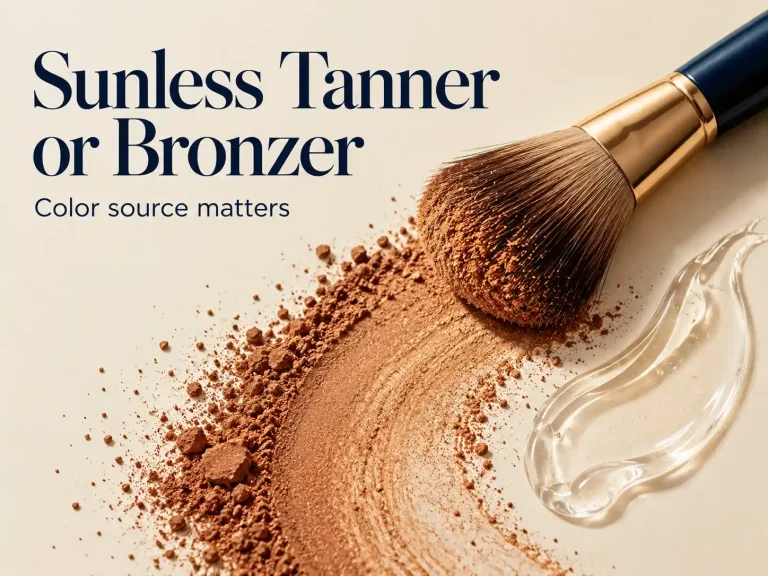
Sunless Tanner vs Bronzer and Melanin Inspired Cosmetics
The distinction between color sources The useful distinction in Sunless Tanner vs Bronzer is the source of color. A bronzing tint supplies visible cosmetic color; a DHA self-tanner forms color through reactions…
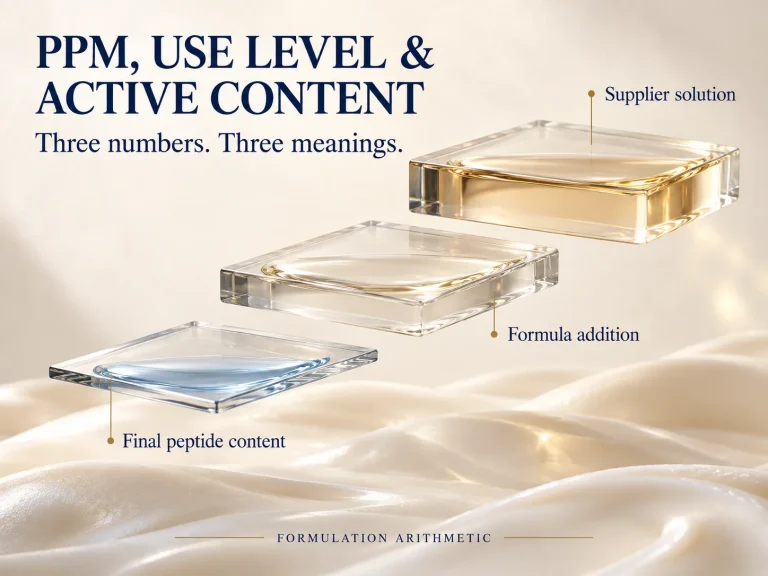
How to Calculate Peptide Concentration from PPM and Use Level
For a mass-based peptide concentration calculation, multiply the verified peptide concentration of the supplied solution by the solution’s mass fraction in the finished formula. A 1,000 ppm peptide solution used at 5%…
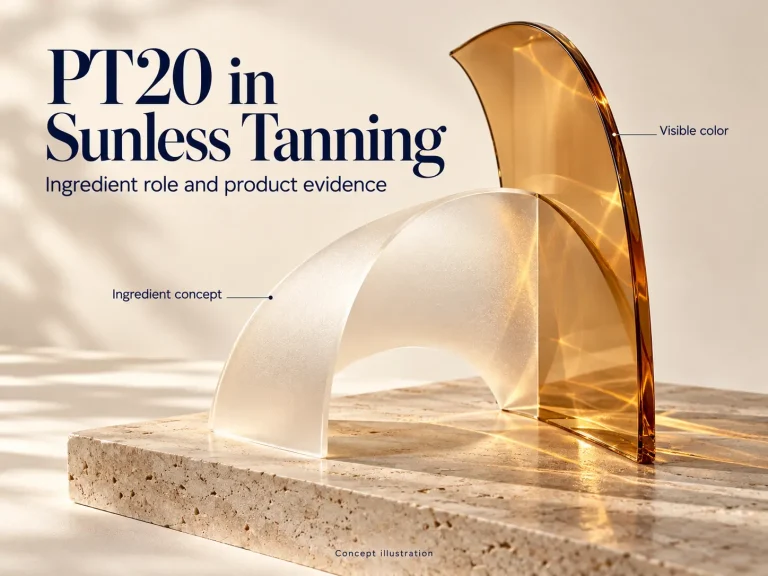
Palmitoyl Tetrapeptide-20 for Peptide Self Tanner Development
The role of PT20 in sunless tanning Palmitoyl Tetrapeptide-20 is a cosmetic peptide discussed in pigmentation research and proposed for peptide self-tanner concepts. For skin-tanning development, its role must be established for…
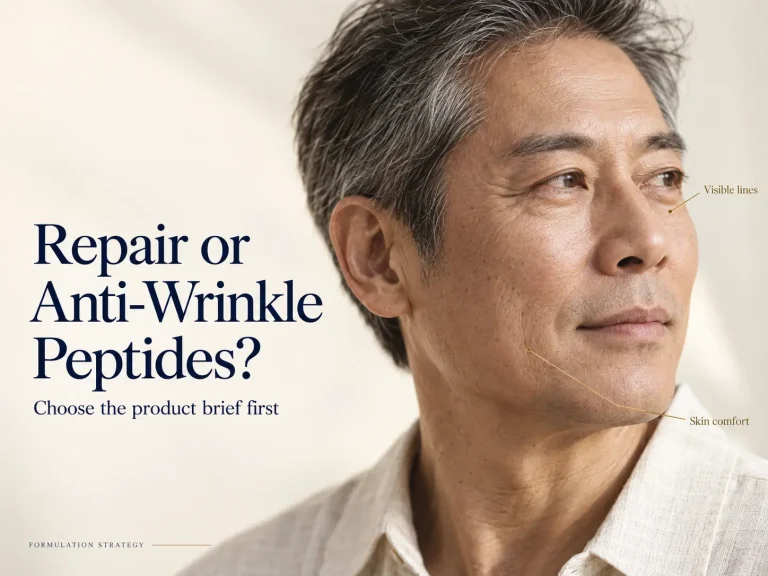
Choosing Repair or Anti-Wrinkle Peptide Solutions
The useful comparison in repair vs anti-wrinkle peptides starts with the finished product’s main goal. A repair-focused brief may prioritize dryness, comfort or a defined barrier-related outcome; an anti-wrinkle brief prioritizes visible…
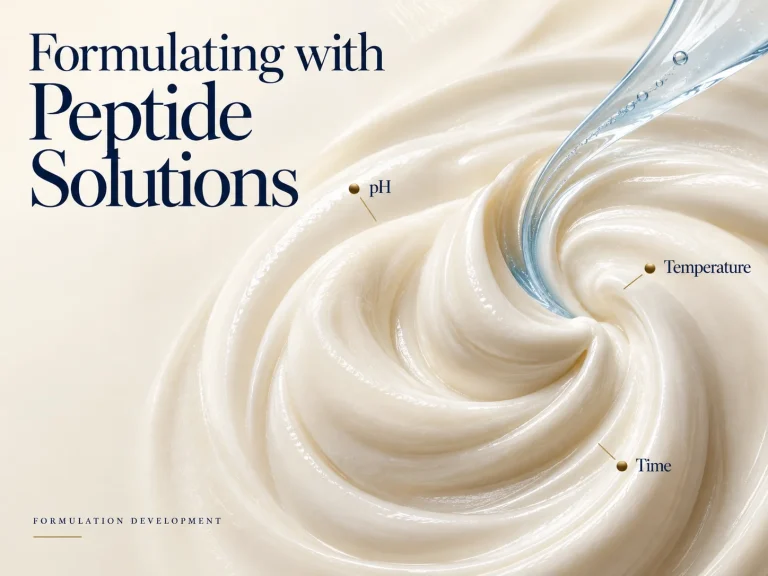
How to Formulate with Peptide Solutions
When formulating with peptide solutions, use the current instructions for the exact commercial ingredient to define a starting pH range, addition stage and temperature exposure. Then verify that process in the complete…
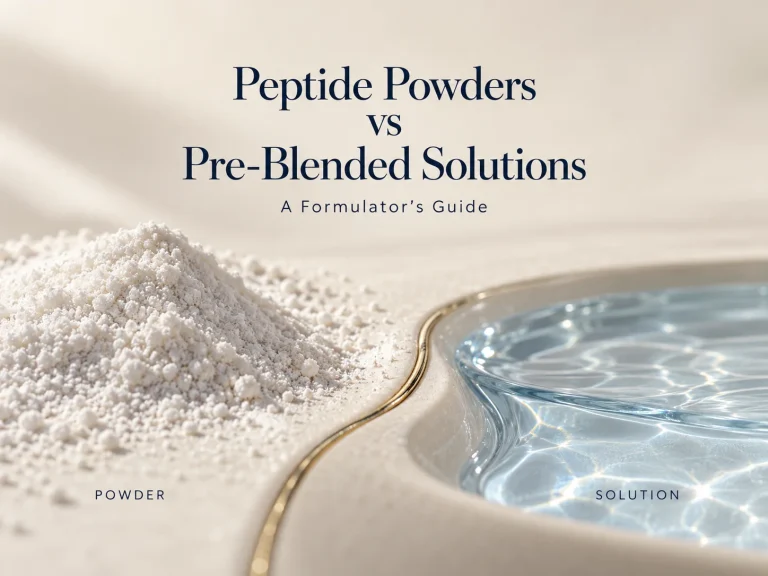
Peptide Powders vs Pre-Blended Peptide Solutions: A Formulator’s Guide
Peptide powders offer more control over carrier choice and, when sourced individually, peptide ratios. Pre-blended peptide solutions can reduce in-house weighing and premixing, but introduce a defined carrier and composition. Neither format…

How to Choose a Multi-Peptide Solution for Skincare Development
Choose a multi-peptide solution for skincare by matching its composition and supporting evidence to a defined product brief. Compare peptide content, carrier ingredients, processing requirements, finished-formula compatibility, and supply documentation. Shortlist candidates…
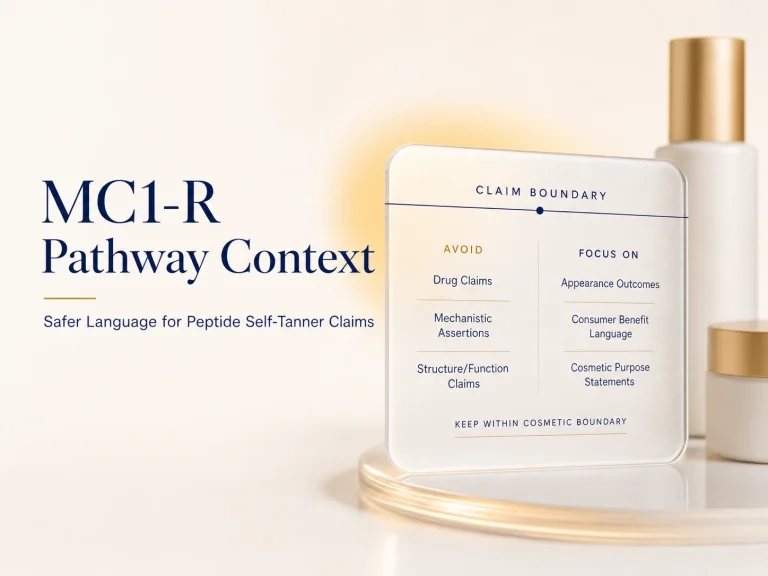
MC1-R Pathway Context for Peptide Self Tanner Claims
Why the Mechanism Needs Reframing MC1-R pathway science is relevant to peptide self-tanner development, but it should not be written as a direct finished-product command over skin biology. The original draft used…
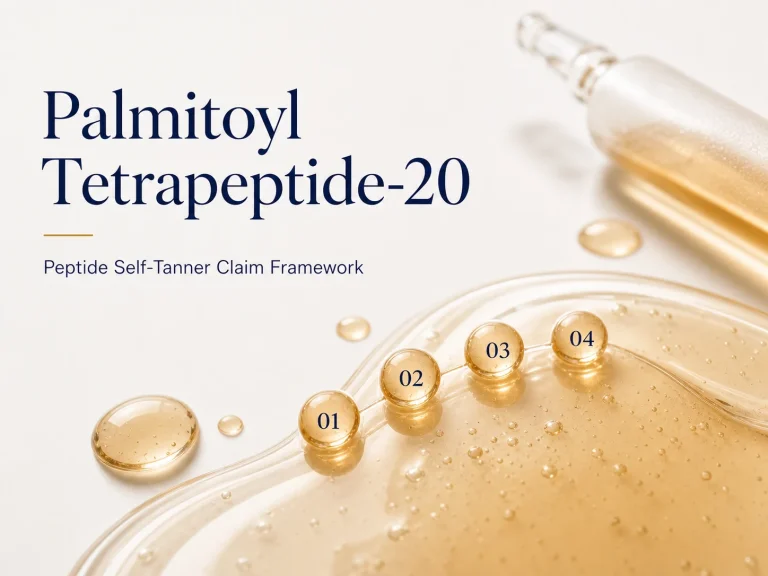
Palmitoyl Tetrapeptide-20 for Peptide Self Tanner Development
Why This Ingredient Needs a Claim Reset Palmitoyl Tetrapeptide-20 is attractive for sunless-color products because it gives peptide self-tanners a more technical story than DHA alone. The risk is that this story…
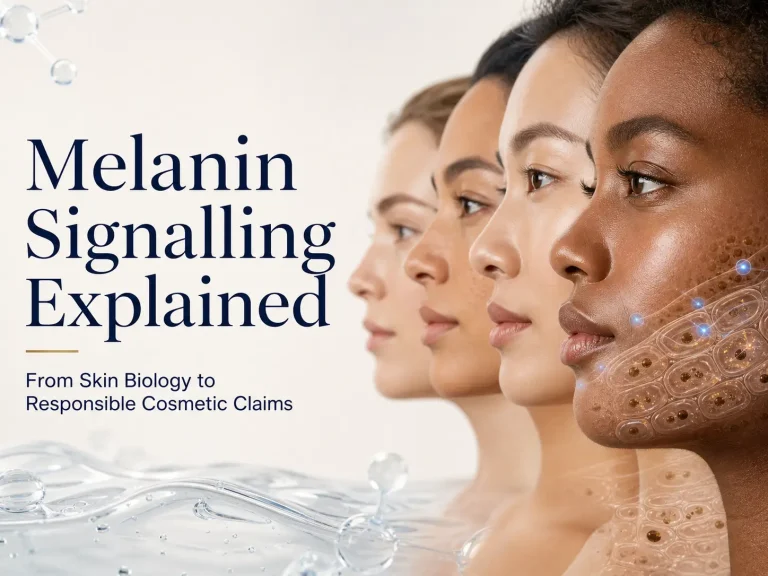
The Physiology of Melanin: How Pigment Signalling Shapes Skin Tone and Product Innovation
Why Pigmentation Science Is Becoming a Product Conversation Consumers are interested in several different outcomes that are often grouped under pigmentation: a more even-looking tone, greater radiance, a sun-kissed appearance, or a…
UV-Free Tanning: How DHA and Cosmetic Peptide Concepts Can Support Safer Glow Positioning
The Sun-Kissed Glow and Its UV Exposure Problem For decades, the golden bronze aesthetic has been associated with vitality, luxury, and an outdoor lifestyle across global markets. This cultural interest in a…
Neuro-Cosmetics 2026: Why Feeling Is the New Seeing in Anti-Aging
For years, anti-aging skincare was mainly judged by what consumers could see: fewer visible lines, smoother texture, brighter tone, and firmer-looking skin. These results still matter. But in 2026, a new layer…