Professional Cosmetics Peptide Supplier | GENOPEP



UV-Free Tanning: How DHA and Cosmetic Peptide Concepts Can Support Safer Glow Positioning
The Sun-Kissed Glow and Its UV Exposure Problem
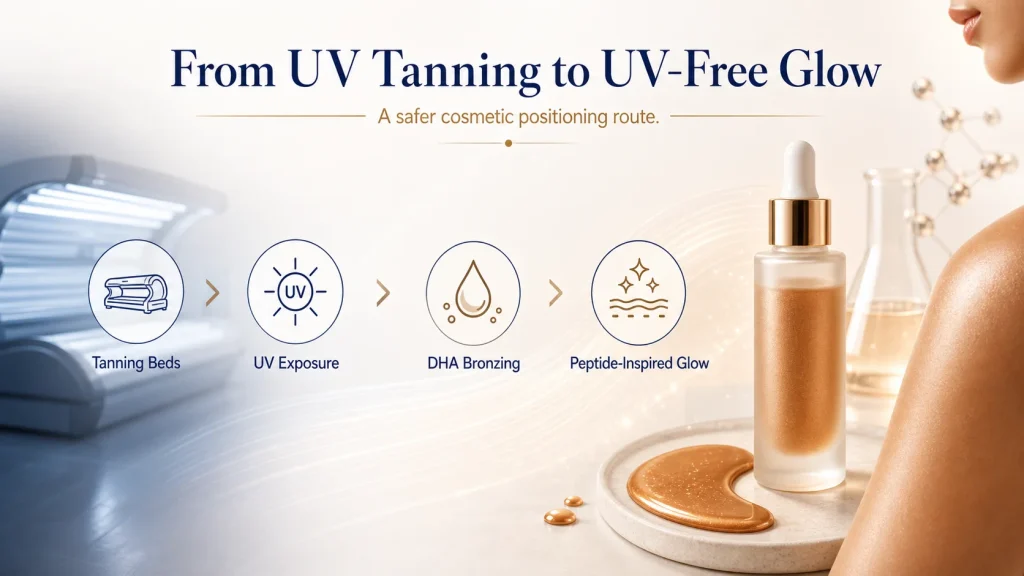
For decades, the golden bronze aesthetic has been associated with vitality, luxury, and an outdoor lifestyle across global markets. This cultural interest in a sun-kissed glow has also driven many consumers toward artificial tanning methods, including ultraviolet (UV) tanning beds. While tanning beds can create fast visible darkening, intentional UV exposure carries well-documented skin-health risks that cosmetic brands should not minimize.
The International Agency for Research on Cancer (IARC), part of the World Health Organization (WHO), classifies UV-emitting tanning devices as Group 1 carcinogenic hazards. This means the hazard classification is established; it should not be interpreted as saying every exposure has the same risk profile as tobacco or asbestos. For B2B skincare brands, the practical implication is clear: tanning-bed positioning is not a responsible route for modern glow-focused product development.
This creates space for UV-free tanning concepts that focus on bronzed-looking skin, even tan appearance, pleasant texture, and responsible cosmetic claim language. The goal is not to promise medical protection from UV damage, but to help brands satisfy glow-focused consumer demand without relying on intentional tanning-bed exposure.
Why Sunless Tanning Needs More Than a Surface Bronzer
In the sunless tanning market, Dihydroxyacetone (DHA) remains the most widely used topical bronzing ingredient. DHA works on the surface through a Maillard-type reaction with amino acids in the outer stratum corneum, creating a visible temporary tint. This makes it useful for fast cosmetic color, but DHA should not be presented as sunscreen or as a substitute for UV protection.
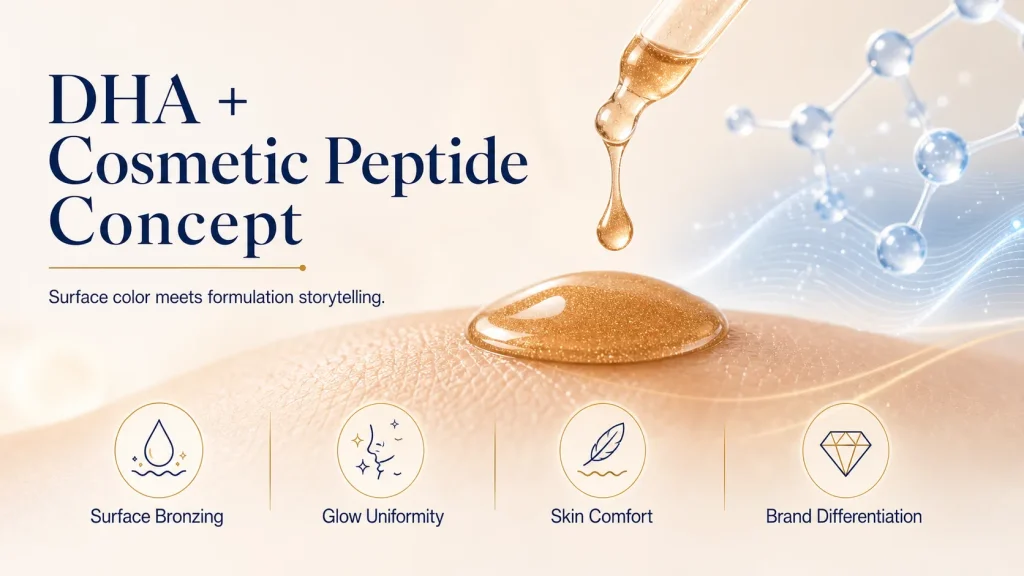
For formulators, the opportunity is to treat DHA as the surface-color foundation of a broader product story. When paired with cosmetic peptide concepts, moisturizers, texture modifiers, and skin-comfort ingredients, a sunless tanning formula can move beyond simple staining and become a more premium, B2B-ready glow formulation.
Cosmetic Peptide Positioning: Inspired by Pigmentation Pathways, Not Medical Control
Palmitoyl Tetrapeptide-20 and alpha-MSH-inspired peptide concepts are often discussed in the context of pigmentation-related cosmetic positioning. For an independent-site article, this topic must be handled carefully. It is safer to describe the concept as inspired by skin pigmentation pathways rather than claiming that a cosmetic product directly activates receptors, triggers intracellular cascades, or guarantees melanin synthesis.
This distinction matters commercially. Buyers need a product story that is interesting, but they also need claim language that can survive regulatory, retail, and brand-review scrutiny. A peptide-supported sunless tanning concept can be positioned around bronzed-looking skin, even tan appearance, glow uniformity, skin comfort, and formula differentiation.
Responsible Claim Boundaries for UV-Free Tanning
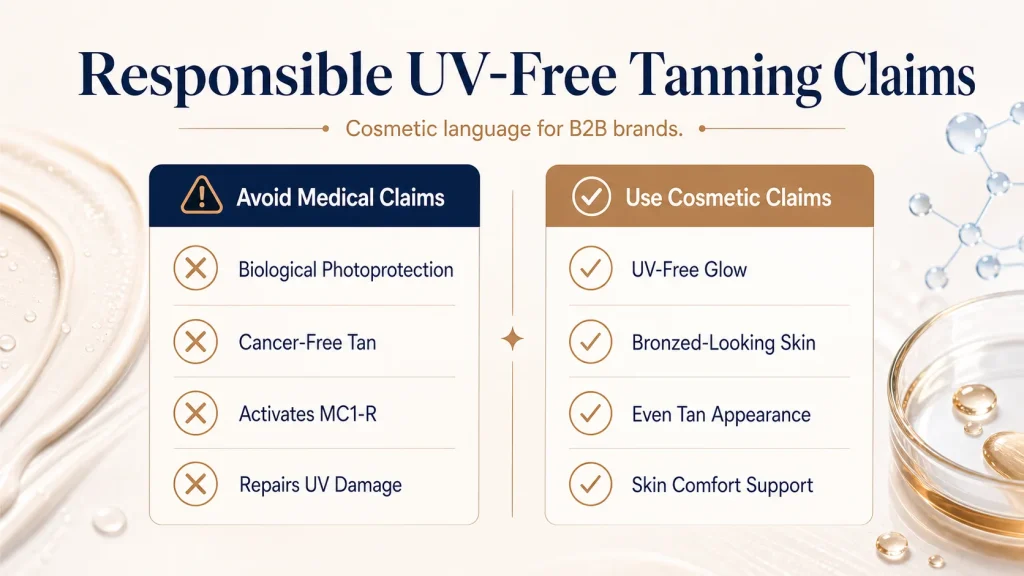
The strongest B2B positioning avoids medical-control language. Claims such as biological photoprotection, cancer-free tan, receptor activation, or UV-damage repair should be removed unless a brand has a very specific regulatory and substantiation strategy. For general cosmetic website content, these phrases create unnecessary risk.
A safer claim direction is appearance-based and sensory: UV-free glow, bronzed-looking skin, even tan appearance, smoother-looking radiance, skin comfort support, and a premium sunless tanning experience. These expressions are easier for consumers to understand and more practical for B2B formulation communication.
Conclusion: Redefining Glow in the Modern Market
As the risks associated with indoor tanning become harder for regulators, retailers, and consumers to ignore, the premium skincare market has an opportunity to move away from intentional UV exposure and toward more responsible glow-focused product concepts.
For B2B brands, the future of tanning-positioned skincare should not be built on promises of biological protection or complete risk elimination. A stronger direction is to combine DHA bronzing, cosmetic peptide storytelling, skin comfort, and responsible claim language into a launch-ready UV-free tanning concept.