Professional Cosmetics Peptide Supplier | GENOPEP



The Physiology of Melanin: How Pigment Signalling Shapes Skin Tone and Product Innovation
Why Pigmentation Science Is Becoming a Product Conversation
Consumers are interested in several different outcomes that are often grouped under pigmentation: a more even-looking tone, greater radiance, a sun-kissed appearance, or a gradual bronze finish without deliberate UV exposure. These goals may look similar on a mood board, but they rely on different biological or cosmetic pathways.
For skincare brands, the opportunity is not to describe pale skin as defective or biologically dormant. It is to understand the pathways behind natural pigmentation and translate that knowledge into clearer product concepts, better ingredient choices, and claims that consumers can understand and trust.
How Melanin Signalling Shapes Natural Skin Tone
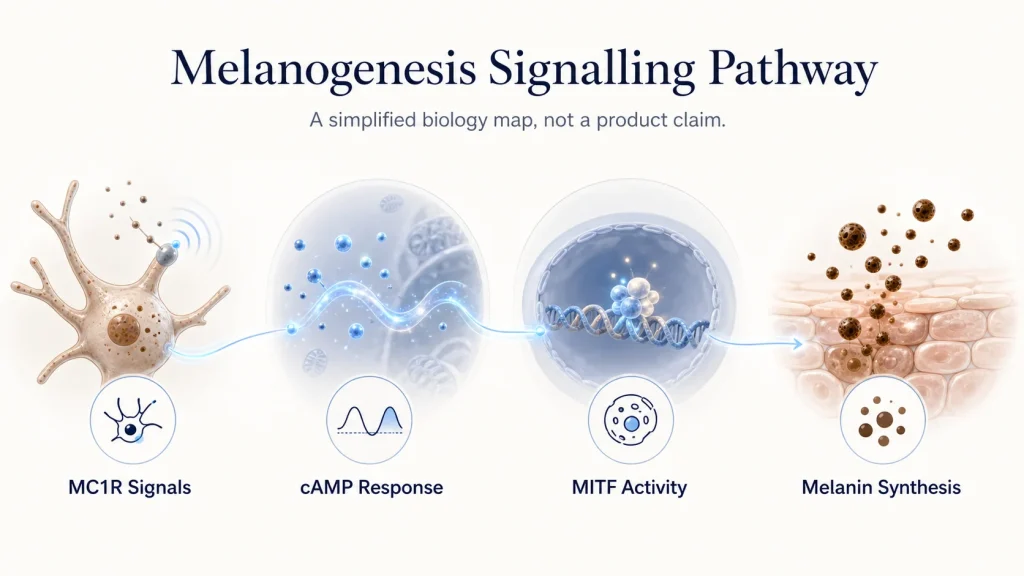
The melanocortin 1 receptor (MC1R) is one of the best-known regulators of melanocyte signalling. When stimulated by physiological ligands such as alpha-melanocyte-stimulating hormone, MC1R can increase intracellular cyclic adenosine monophosphate (cAMP), influence protein kinase A and CREB signalling, and support MITF-dependent expression of melanogenic enzymes including tyrosinase. This pathway contributes to pigment production and to the balance between eumelanin and pheomelanin.
Pigmentation is not a single on-and-off switch. Genetics, MC1R variants, signals from keratinocytes, hormonal influences, age, inflammation, and UV exposure all affect the final response. For product development, pathway data can help explain an ingredient concept, but in vitro activity alone does not prove that a finished formula will visibly change skin tone.
Eumelanin, Pheomelanin, and the Limits of a Natural Tan
Eumelanin is generally more effective than pheomelanin at absorbing and dissipating ultraviolet energy. Higher constitutive eumelanin levels are associated with lower levels of some forms of UV-induced DNA damage under comparable exposure conditions. This relative protection helps explain differences in UV response across skin tones, but it does not make any skin tone immune to sun damage.
This is an important point for consumer communication. A visible tan is not evidence of healthier skin, and naturally deeper pigmentation does not replace sunscreen. Broad-spectrum sunscreen, protective clothing, shade, and sensible exposure habits remain relevant for every skin tone.
Why Sunless Color Is a Different Product Opportunity
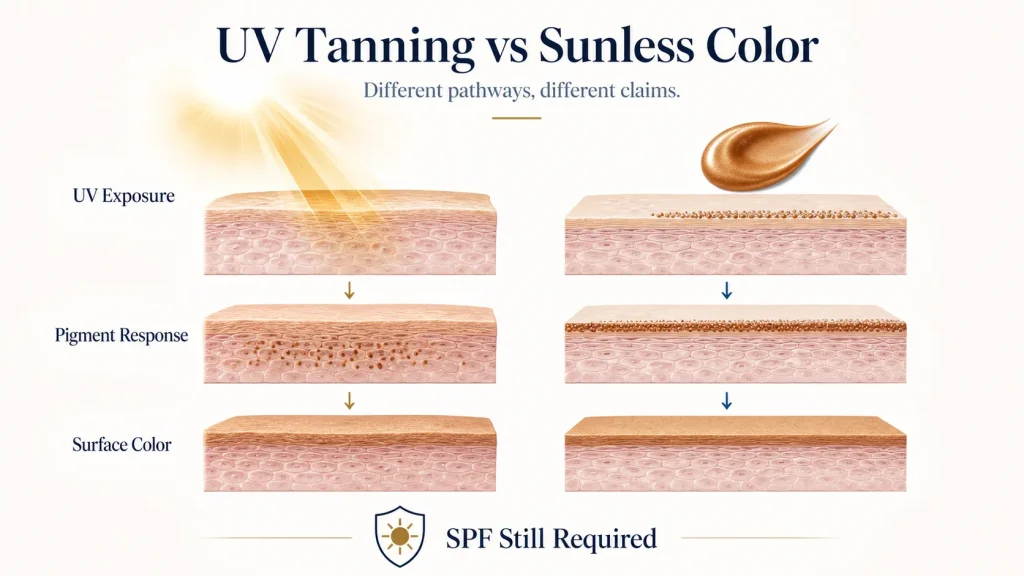
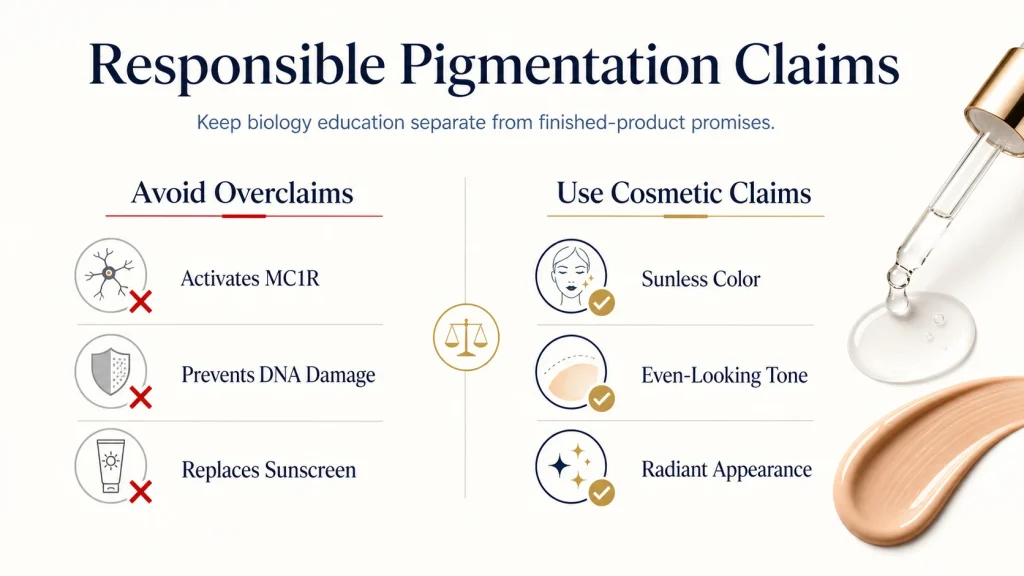
UV-induced tanning is an adaptive response that follows ultraviolet stress and DNA-damage signalling. It should not be positioned as a health benefit or a biological requirement. Product stories that suggest a tan prevents future UV damage, strengthens the genome, or replaces sunscreen create misleading photoprotection implications.
Sunless tanning works differently. Ingredients such as dihydroxyacetone create temporary color through reactions in the outer stratum corneum rather than by increasing melanin production. This opens useful format opportunities – gradual body lotions, facial tanning drops, lightweight serums, and tinted moisturizers – while the core consumer message remains appearance-focused: color without intentional UV exposure.
A Practical Product Development Checklist
Consumer promise: define whether the product is designed for even-looking tone, radiance, immediate tint, or gradual sunless color.
Evidence level: separate ingredient mechanism data, ex vivo observations, instrumental human results, and consumer-perception findings.
Format and formula: match the active system to facial serums, drops, creams, or body lotions, then evaluate pH, solubility, preservation, packaging, and compatibility.
Sensory and stability: monitor odor, streaking, color development, transfer, formula discoloration, and real-time stability in the finished base.
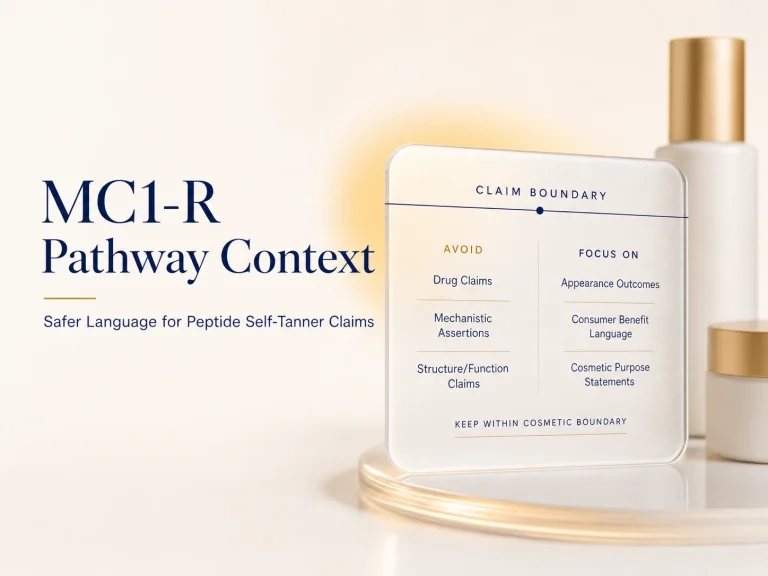
Claim boundary: use clear appearance language supported by the finished formula, and never imply that a pigment concept or sunless tan replaces an approved sunscreen.
Conclusion: Translate Pigment Science into Better Product Choices
The future of pigmentation-focused skincare is not about treating pale skin as a problem or encouraging consumers to tan for health. It lies in developing products with a clear purpose: helping skin look more even and radiant, delivering controlled sunless color, and giving consumers attractive alternatives to intentional UV tanning.
Credible product development keeps three layers separate: established skin biology, ingredient-level research, and finished-formula performance. When those layers are connected carefully, pigment science becomes a strong platform for innovation without turning a cosmetic story into a medical promise.
References
- Cui, R. et al. (2007). Central role of p53 in the suntan response and pathologic hyperpigmentation. Cell, 128(5), 853-864. https://doi.org/10.1016/j.cell.2006.12.045
- D’Orazio, J. A. et al. (2006). Topical drug rescue strategy and skin protection based on the role of Mc1r in UV response. Nature, 443, 340-344. https://doi.org/10.1038/nature05098
- Tadokoro, T. et al. (2003). UV-induced DNA damage and melanin content in human skin differing in racial/ethnic origin. FASEB Journal, 17(9), 1177-1179. https://doi.org/10.1096/fj.02-0865fje
- Premi, S. et al. (2015). Chemiexcitation of melanin derivatives induces DNA photoproducts long after UV exposure. Science, 347(6224), 842-847. https://doi.org/10.1126/science.1256022
- U.S. Food and Drug Administration. Sunless Tanners & Bronzers. https://www.fda.gov/cosmetics/cosmetic-products/sunless-tanners-bronzers
- U.S. Food and Drug Administration. Sunscreen: How to Help Protect Your Skin from the Sun. https://www.fda.gov/drugs/understanding-over-counter-medicines/sunscreen-how-help-protect-your-skin-sun