Professional Cosmetics Peptide Supplier | GENOPEP



cosmetic peptide formulation
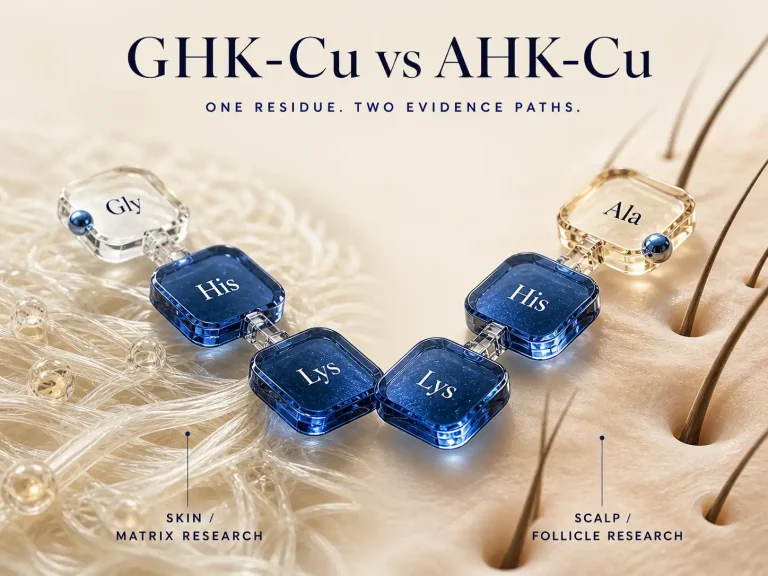
GHK-Cu vs AHK-Cu: What Changes, What the Evidence Supports, and How Formulators Should Choose
GHK-Cu and AHK-Cu are related copper-bound tripeptides, but they are not interchangeable names for one ingredient. GHK-Cu contains glycine-histidine-lysine, whereas AHK-Cu contains alanine-histidine-lysine. GHK-Cu has the broader published record in skin and…
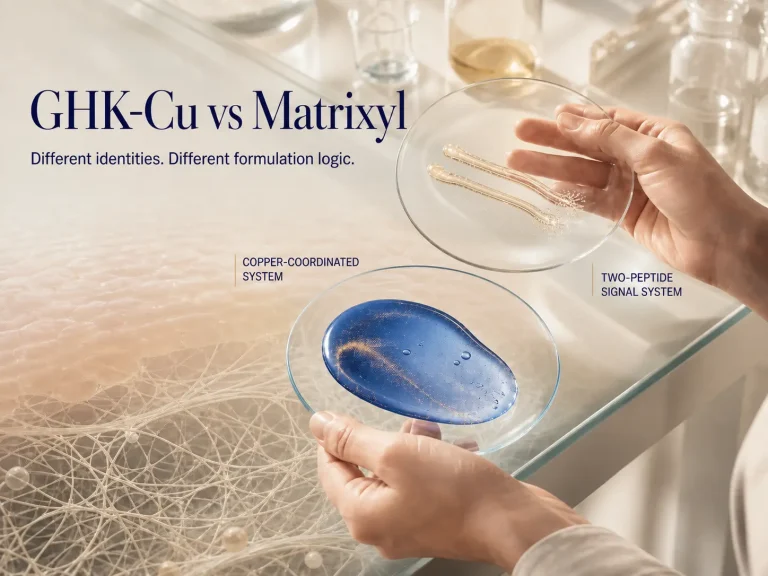
GHK-Cu vs Matrixyl: How Copper Peptides and Signal-Peptide Systems Differ
GHK-Cu vs Matrixyl is not a comparison between two equivalent single peptides. GHK-Cu is a defined copper complex of the tripeptide Gly-His-Lys and is listed in cosmetics as Copper Tripeptide-1. Matrixyl is…
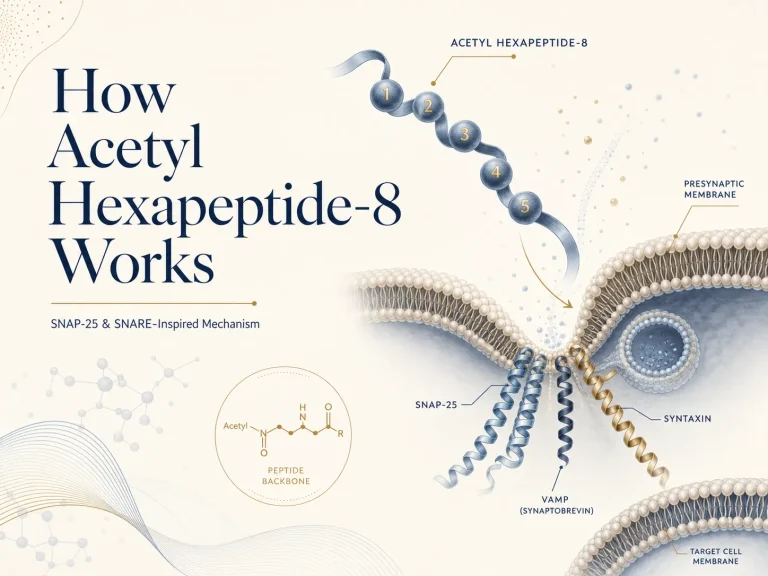
How Does Acetyl Hexapeptide-8 Work? Understanding Its SNAP-25 and SNARE-Inspired Mechanism
Acetyl Hexapeptide-8 is a synthetic hexapeptide designed from a SNAP-25-related sequence. In laboratory mechanism studies, it interfered with the formation or stability of the SNARE complex involved in calcium-dependent vesicle fusion and…
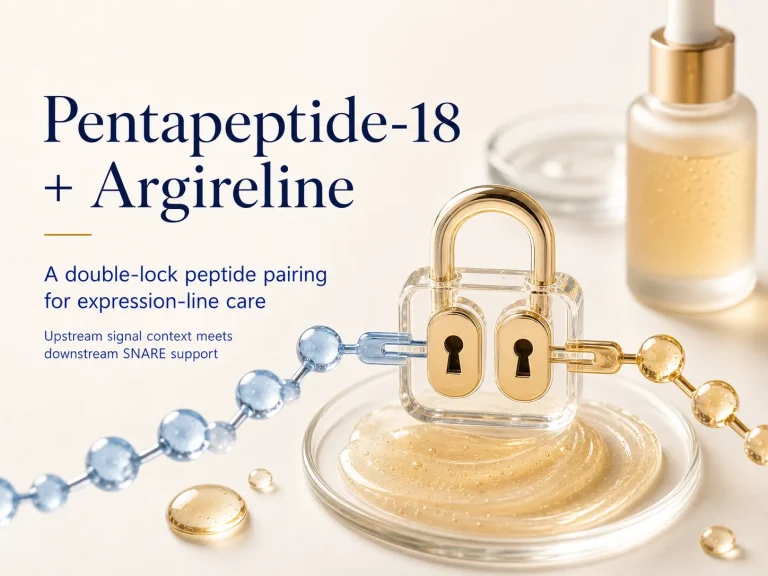
The Synergistic Double-Lock: Pairing Pentapeptide-18 and Acetyl Hexapeptide-8 for Expression-Line Care
The Concept of Multi-Targeting Expression-Line Pathways In professional cosmetic chemistry, single-active products can reach a communication and performance plateau. When an age-care formula relies on one pathway only, the visible result depends…

Voltage-Gated Calcium Channels: The Gatekeepers of Presynaptic Neurotransmitter Release
Ion Flux and Action Potential Propagation The baseline mechanics of neuromuscular transmission rely on electrochemical gradients maintained across the neuronal plasma membrane. In a resting state, a motor neuron exhibits a negative…
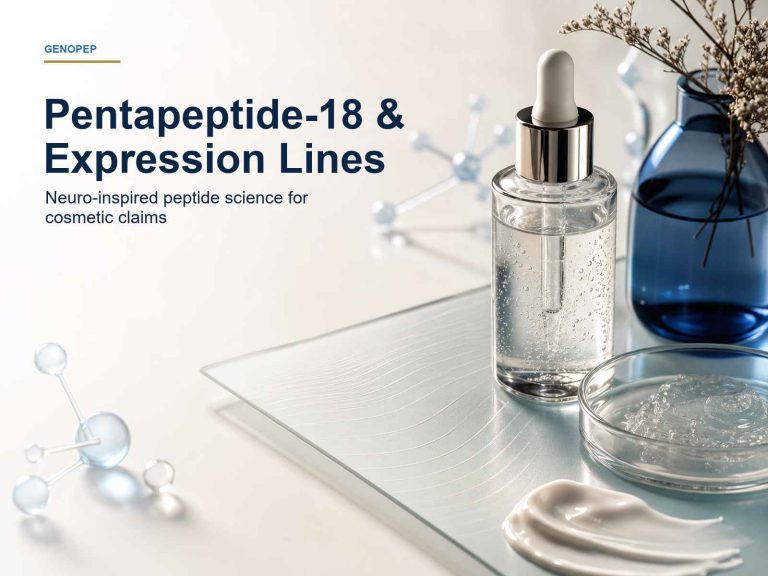
Pentapeptide-18 and Expression Lines: Synaptic Vesicle Fusion as Cosmetic Science Context
Introduction to Neuro-Cosmetics and Expression Lines The professional skincare conversation has moved beyond basic epidermal hydration and barrier repair. A more advanced discussion now includes neuro-cosmetics: the study of how skin appearance…
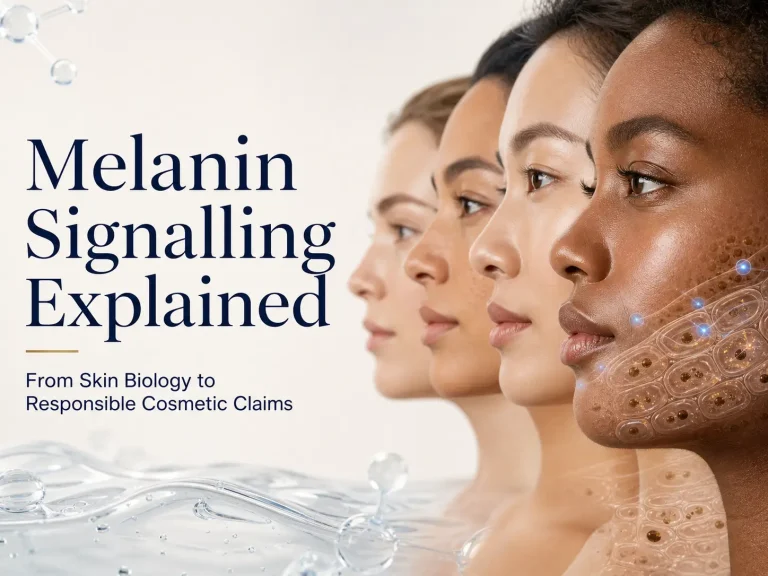
The Physiology of Melanin: How Pigment Signalling Shapes Skin Tone and Product Innovation
Why Pigmentation Science Is Becoming a Product Conversation Consumers are interested in several different outcomes that are often grouped under pigmentation: a more even-looking tone, greater radiance, a sun-kissed appearance, or a…
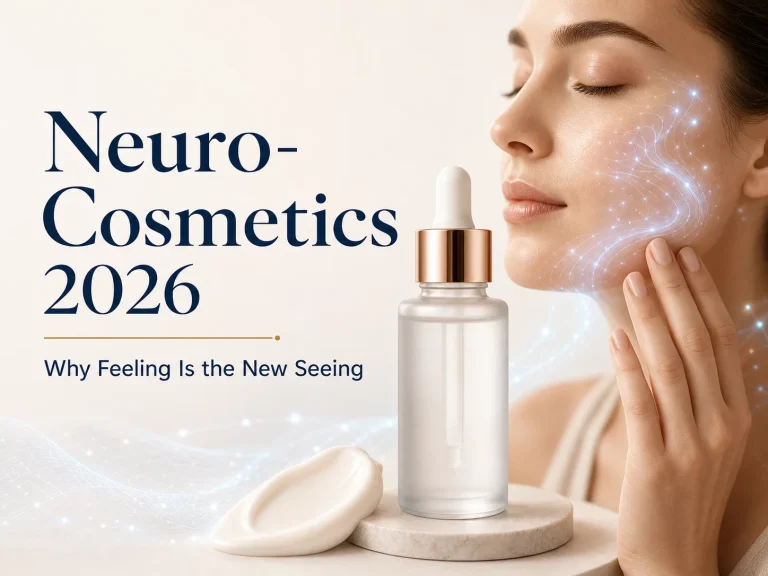
Neuro-Cosmetics 2026: Why Feeling Is the New Seeing in Anti-Aging
For years, anti-aging skincare was mainly judged by what consumers could see: fewer visible lines, smoother texture, brighter tone, and firmer-looking skin. These results still matter. But in 2026, a new layer…