Professional Cosmetics Peptide Supplier | GENOPEP



Neuro-Cosmetics 2026: Why Feeling Is the New Seeing in Anti-Aging
For years, anti-aging skincare was mainly judged by what consumers could see: fewer visible lines, smoother texture, brighter tone, and firmer-looking skin. These results still matter. But in 2026, a new layer of product experience is becoming more important: how the skin feels.
This is where neuro-cosmetics becomes commercially relevant. For skincare brands, the opportunity is not to make medical claims about the nervous system. The opportunity is to build products that connect visible skin quality with comfort, calm feel, texture experience, and a more relaxed-looking appearance.
From Visual Claims to Sensory Trust
Consumers are becoming more aware of the relationship between lifestyle, stress, sleep, emotional state, and skin appearance. They may not use scientific language, but they understand the daily reality: tired skin feels tight, stressed skin looks dull, and facial tension can make expression lines appear more noticeable.
This shift creates a new type of trust signal. A product no longer needs to communicate only long-term visual improvement. It can also communicate immediate skin comfort, pleasant texture, reduced tight-feeling sensation, and a softer overall skin experience.
For B2B brands, this matters because sensory experience can help a formula feel more premium. When a consumer feels the product working through comfort and texture, the formula becomes easier to trust and easier to repurchase.
The Brain-Skin Axis, Cosmetic Version
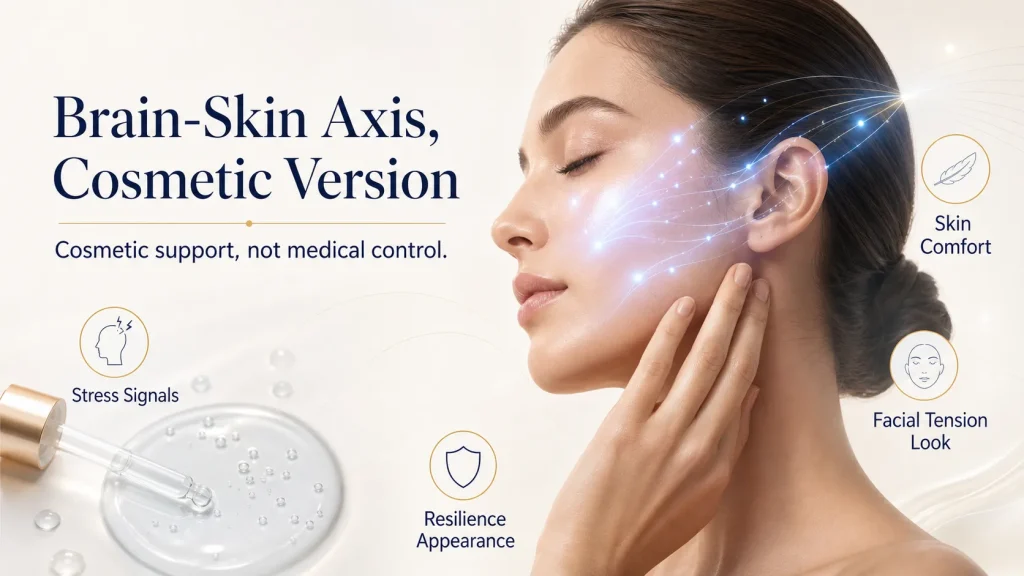
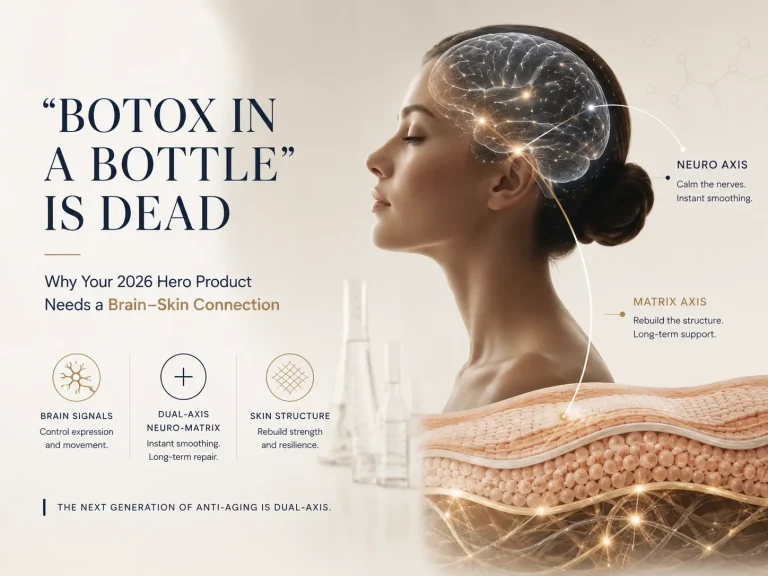
The brain-skin axis is often discussed in scientific and wellness contexts. For cosmetic brands, it should be used carefully. The safer and more useful interpretation is not “controlling” biological pathways, but understanding how stress, environment, and sensory experience can influence the way skin looks and feels.
A cosmetic product cannot claim to regulate emotions, treat stress, or control the nervous system. But it can be positioned to support skin comfort, improve the feeling of hydration, soften the look of expression lines, and create a calmer skincare ritual.
This distinction is critical. Neuro-cosmetics should not become a shortcut to drug-like claims. It should become a more refined way to talk about sensory skincare, facial tension appearance, skin comfort, and visible skin quality.
Why Skin Comfort Matters in Anti-Aging Positioning
Anti-aging is no longer only about correcting visible signs. Many consumers now expect products to feel good from the first use. A formula that supports a comfortable, hydrated, and relaxed skin feel can strengthen the overall anti-aging story.
This is especially relevant for products targeting expression-line care, tired-looking skin, stress-related dullness, and skin that feels tight or reactive. These concerns sit between appearance and sensation, which makes them ideal for neuro-inspired cosmetic positioning.
For formulators, the key is to design the product as a complete experience. Peptides, moisturizers, barrier-support ingredients, texture modifiers, and sensorial components should work together to create both visible and sensory value.
Neuro-Inspired Peptides: A Safer B2B Claim Direction

Peptides can play an important role in neuro-inspired skincare positioning, but the claim language must remain cosmetic. Instead of saying a peptide controls receptors, neurotransmitters, or muscle activity, the safer direction is to describe the visible and sensory outcome.
For example, a peptide-based concept can be positioned around smoother-looking expression lines, relaxed-looking skin, improved skin comfort, and a more pleasant daily skincare experience. These claims are easier for consumers to understand and safer for brands to use.
This also gives B2B buyers a stronger development framework. Instead of relying on complex medical language, suppliers can support brands with formulation notes, suitable product formats, texture direction, and responsible claim wording.
How Brands Can Use This Trend Responsibly
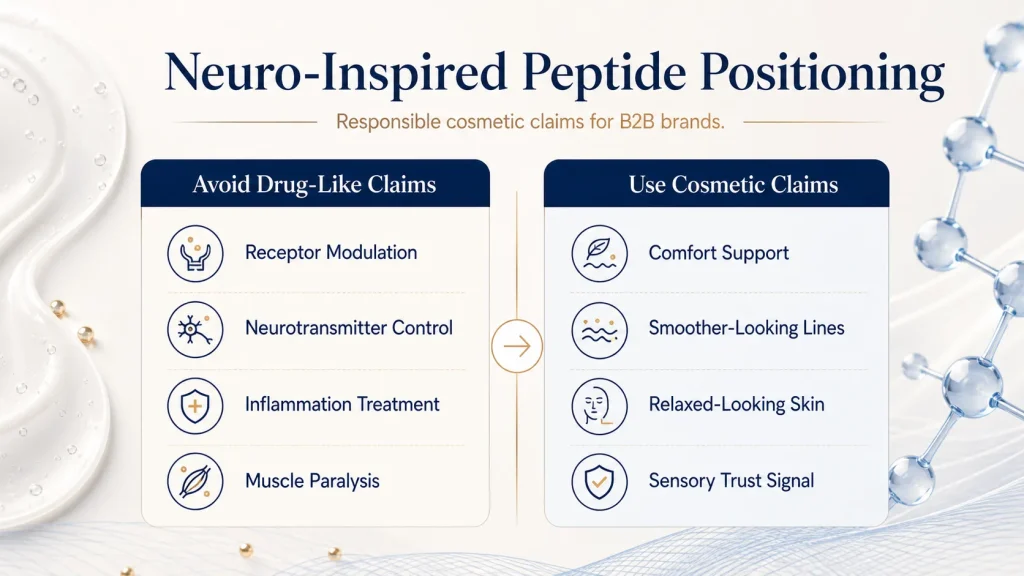
The strongest neuro-cosmetics products will not be the ones with the most dramatic mechanism claims. They will be the ones that translate the trend into a believable product experience.
For B2B skincare brands, the responsible approach is clear: use neuro-cosmetics as a bridge between anti-aging, skin comfort, and sensorial skincare. Keep the claims appearance-based. Avoid medical control language. Make sure the product format, texture, and ingredient story all support the same positioning.
In this sense, “feeling is the new seeing” does not mean that visible results are no longer important. It means that the consumer’s sensory experience is becoming part of how anti-aging products build trust.