Professional Cosmetics Peptide Supplier | GENOPEP



The 14-Day Melanin Timeline: What Gradual Tanner Brands Should Promise
The 24-Hour Expectation Meets Skin Biology
The self-tanning category is built around a simple consumer wish: visible warmth without sun exposure. That expectation creates pressure for fast results, especially when a formula combines DHA, hydration claims and a peptide story. The problem is not that consumers want speed. The problem is when a product story turns speed into an unrealistic biological promise.
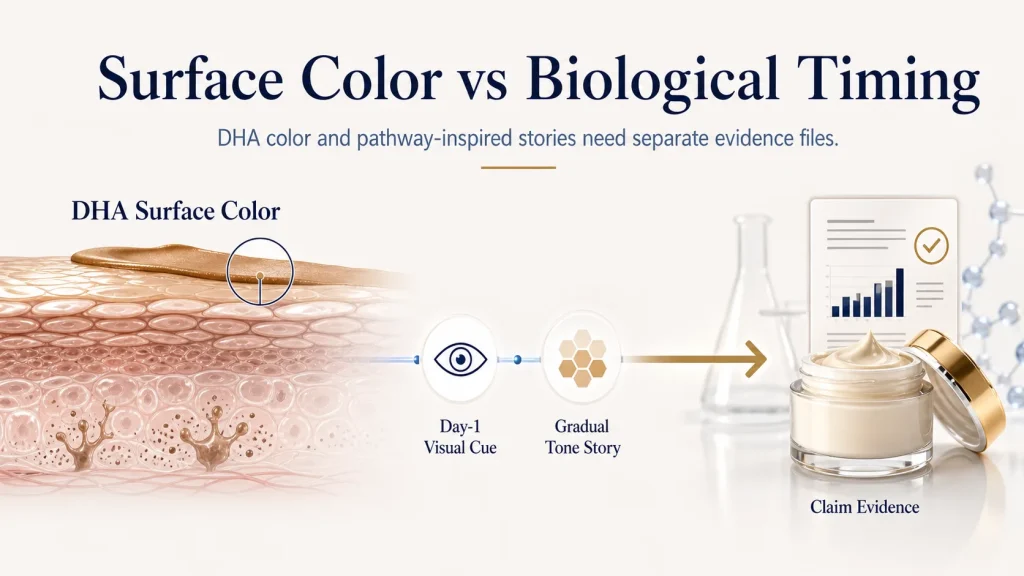
A responsible gradual self tanner should separate two timelines. The first is the surface-color timeline created by DHA or bronzer systems. The second is the slower education story around melanin biology, melanosome transfer and epidermal renewal. Keeping those timelines separate makes the article more credible and makes the finished-product claim easier to defend.
DHA Is a Surface-Color Technology
Dihydroxyacetone, or DHA, remains the most familiar route for sunless color. It works at the outer stratum corneum, where it reacts with amino acids in the surface protein matrix to create a temporary brown-toned appearance. This is why a DHA self tanner can deliver an early visual cue while staying within a cosmetic appearance framework.
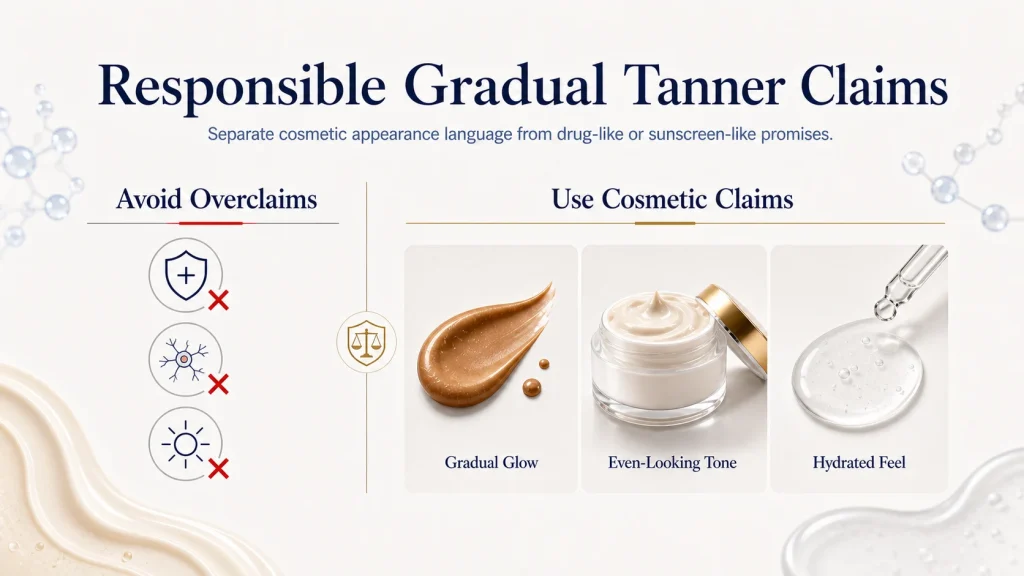
That distinction matters. DHA color should be described as surface color, gradual glow or even-looking tone. It should not be positioned as a substitute for sun-care products, and it should not be merged with deeper biological language in a way that implies a finished cosmetic has changed the skin’s defensive biology.
What the 14-Day Timeline Can and Cannot Mean
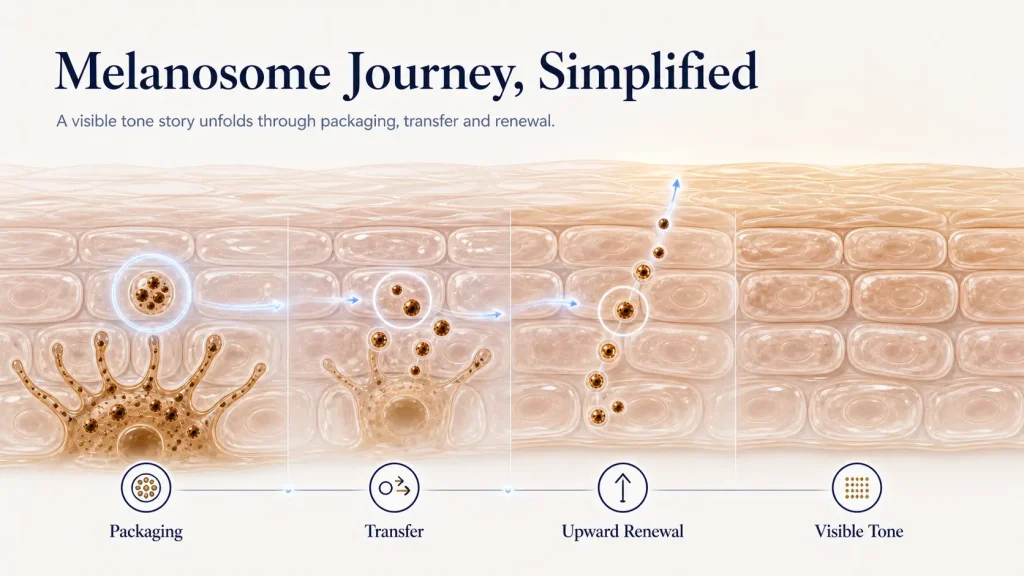
Melanin biology is not a one-step color switch. Pigment is packaged into melanosomes, transferred from melanocytes to surrounding keratinocytes, and carried upward as epidermal cells mature. This process is useful for explaining why biologically inspired tone stories cannot be compressed into an overnight claim.
The phrase “14-day melanin timeline” can be a useful educational frame for gradual products, but it should not be treated as an absolute biological law or a universal performance guarantee. Human skin turnover varies by body site, age, skin condition and testing method. A better claim route is to present 14 days as a realistic product-use window for observing gradual appearance changes under controlled evaluation.
Where Peptide Stories Fit
Peptide self-tanner positioning can still be commercially useful, especially for brands that want a more technical story than DHA alone. A peptide such as Palmitoyl Tetrapeptide-20 may be discussed as part of an ingredient-level, pathway-inspired concept, but the finished formula should not claim receptor control or internal biological shielding unless the evidence and regulatory pathway clearly support that direction.
A more defensible product architecture is layered: DHA for early surface color, humectants such as hyaluronic acid for a comfortable hydrated feel, and cosmetic peptides for a formulation story around skin quality and gradual tone support. The evidence file should then match the exact promise: colorimetry, shade uniformity, rub-off testing, user perception, hydration measurements and finished-formula stability.
Product Development Checklist
Before launching a gradual self tanner, product teams should decide which part of the story is visual, which part is sensory, and which part is mechanism education. That decision should happen before copywriting, not after the label is already built.
- Consumer promise: gradual glow, even-looking tone, smoother application and a hydrated feel.
- Color system: DHA, bronzer, gradual tint, or a hybrid surface-color approach.
- Mechanism story: melanin biology may educate the reader, but it should not become a direct action claim.
- Evidence plan: colorimetry, visual grading, consumer perception, rub-off, odor, stability and packaging compatibility.
- Claim boundary: avoid receptor-action language, sun-care substitute wording and internal-defense promises for ordinary cosmetics.
Conclusion: A Better Timeline Builds More Trust
The strongest gradual tanner story is not the most aggressive one. It is the clearest one. DHA can create early surface color. Hydrating systems can improve application feel. Peptide and melanin biology can help explain why gradual appearance claims should be tested over a realistic use window. When each layer is named honestly, the product becomes easier to understand, easier to substantiate and easier for a brand to launch with confidence.
CTA
GENOPEP supports skincare brands developing sunless-color and gradual-tone concepts with cosmetic peptide ingredients, formula-positioning guidance and technical documentation. Development support can be aligned with DHA systems, hydration formats, evidence planning and target-market claim boundaries.
References
1. U.S. Food and Drug Administration. Sunless Tanners & Bronzers. https://www.fda.gov/cosmetics/cosmetic-products/sunless-tanners-bronzers
2. Marks M.S., Seabra M.C. The melanosome: membrane dynamics in black and white. Nature Reviews Molecular Cell Biology. 2001. https://doi.org/10.1038/35096009
3. Hume A.N., Seabra M.C. Melanosome transport at a glance. Journal of Cell Science. 2011. https://doi.org/10.1242/jcs.065805
4. D’Orazio J.A., Jarrett S., Amaro-Ortiz A., Scott T. UV radiation and the skin. International Journal of Molecular Sciences. 2013. https://doi.org/10.3390/ijms140612222