Professional Cosmetics Peptide Supplier | GENOPEP



Vegan & Clean Beauty: 6-Peptide Matrix Documentation for Conscious Beauty Brands
The Shift Toward Ethical Skincare: Why Clean and Vegan Documentation Matters
In the global beauty landscape of 2026, the definitions of clean and vegan have moved from niche marketing language into important screening factors for premium skincare brands. The modern conscious consumer is no longer satisfied with vague promises; they expect more transparency regarding the origin, manufacturing process, and ethical footprint of active ingredients.
For B2B brands preparing for retailer review or premium channel discussions, documented supply-chain evidence can help move a prospect from interest to serious evaluation. It does not replace final retailer, certifier, or legal review, but it reduces uncertainty and gives regulatory teams a clearer starting point.
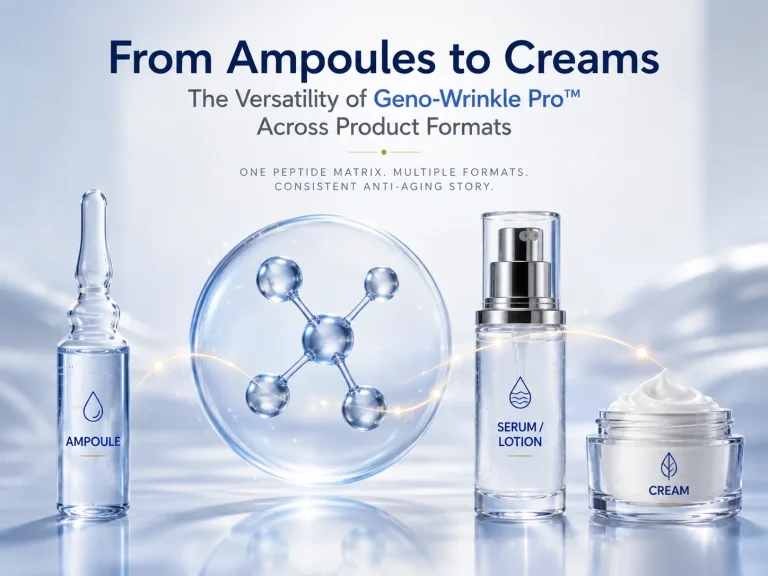
At GENOPEP, the value of Geno-Wrinkle Pro™ extends beyond peptide performance positioning. To support partners working in clean and vegan beauty, GENOPEP provides documentation around non-animal origin, supplier transparency, and ingredient-review support for the 6-peptide matrix.
Non-Animal Origin: The Documentation Logic Behind the 6-Peptide Matrix
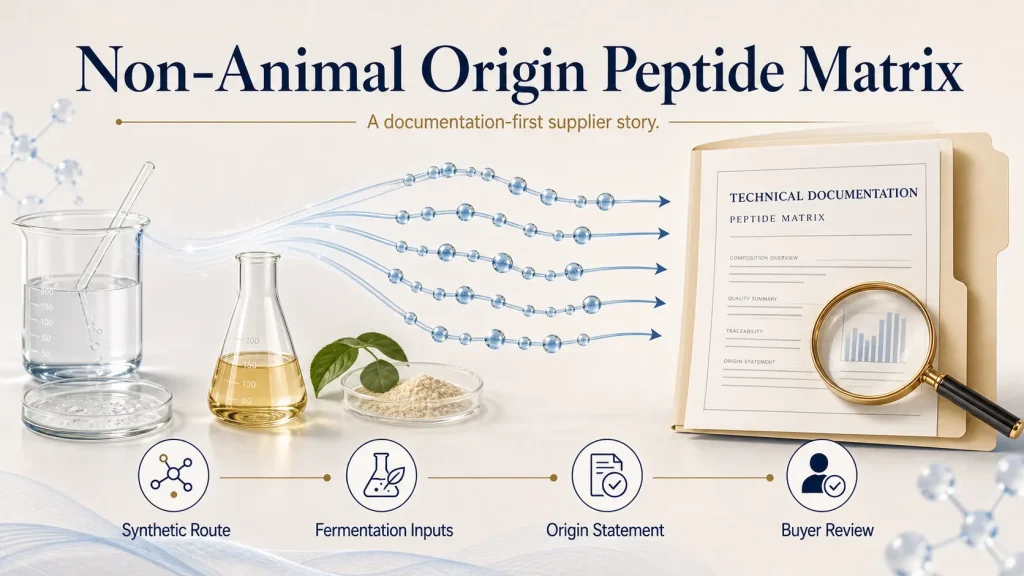
A vegan-positioned skincare ingredient should avoid animal tissues, animal secretions, and animal-derived processing inputs according to the applicable certification or brand-review framework. For peptide ingredients, this means buyers need more than an INCI name; they need raw-material origin statements, process information, and supplier declarations that can be reviewed as part of a finished-product dossier.
For Geno-Wrinkle Pro™, the documentation focus is the non-animal origin of the peptide matrix and its supporting materials. This gives brand owners a clearer basis for vegan-positioning discussions and helps technical teams prepare more complete review files.
Synthetic Precision vs. Biological Extraction
The peptides in the matrix are positioned around synthetic or biotechnology-supported production routes rather than animal extraction. Solid-Phase Peptide Synthesis (SPPS) allows peptide sequences to be built with controlled identity and quality, while raw-material origin documentation can support non-animal origin review.
Where applicable, supporting chains or inputs should be documented through supplier origin statements. This is more useful for B2B buyers than broad ethical language alone, because it gives regulatory and procurement teams material they can actually review.
Clean Beauty Review Support: Sephora, Ulta, and Retailer Screening
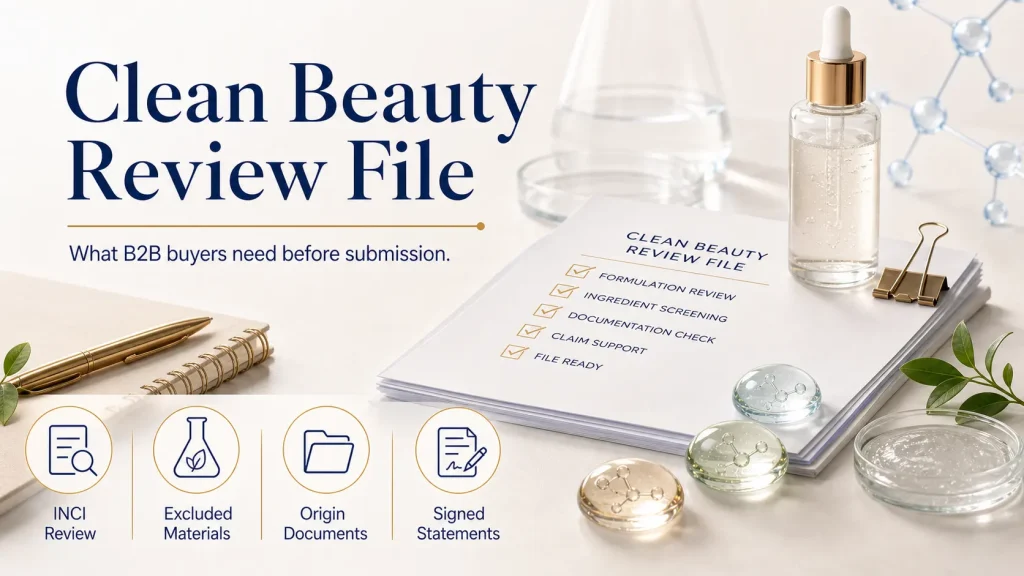
Clean beauty programs such as Clean at Sephora and Conscious Beauty at Ulta have made ingredient transparency more visible to consumers and retailers. These programs are not identical, and their requirements may change over time, so ingredient suppliers should avoid claiming universal or automatic compliance.
A more responsible B2B approach is to provide a review-ready file: INCI information, excluded-material statements where applicable, origin documents, preservative and carrier details, and signed supplier statements. These documents can support a brand’s internal review and retail submission process.
Transparency and Documentation: Declaration Templates for Brand Owners
In the final procurement decision phase, technical managers and regulatory teams need more than a list of peptide names. They need wording that can be reviewed, adapted, and incorporated into a brand’s own Product Information File (PIF), supplier questionnaire, or retailer submission package.
Sample Declaration: Non-Animal Origin and Animal-Testing Status
Below is a review-oriented declaration framework that may be adapted according to the final formula, market, and certification pathway:
This is to certify that Geno-Wrinkle Pro™ is supplied with non-animal origin documentation for its peptide matrix and relevant supporting materials, based on current supplier declarations. No animal tissues, animal cells, or animal secretions are intentionally used in the manufacturing process by the supplier. Animal-testing status should be reviewed according to the finished brand formula, market requirements, and applicable certification body.
Sample Declaration: Exclusion of Selected Materials
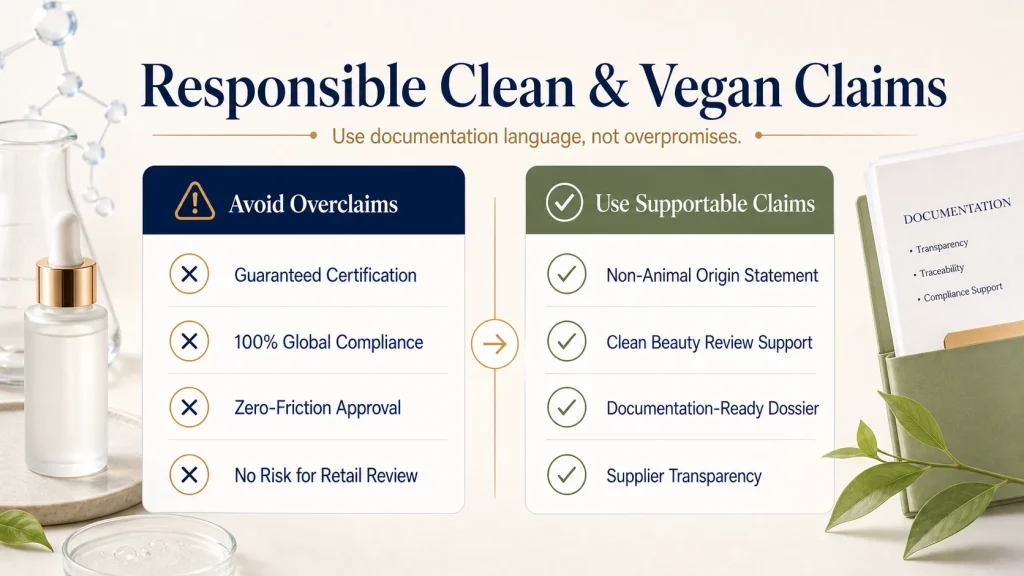
A clean-positioning declaration should avoid overpromising universal compliance. A safer framework is:
Based on current supplier documentation, Geno-Wrinkle Pro™ is not intentionally formulated with selected material categories commonly reviewed in clean beauty programs, such as parabens, phthalates, SLS/SLES, formaldehyde-releasing preservatives, or mineral oil. Final clean beauty eligibility depends on the finished formula, brand claims, retailer program criteria, and market-specific review.
Strategic Brand Value: Using Ethical Supply Chains Responsibly
For modern skincare brands, ethical sourcing and transparency are not only values; they are practical tools for reducing buyer uncertainty. When a brand can pair peptide performance positioning with clear documentation, it creates a stronger story for conscious consumers and a stronger review package for B2B buyers.
This is especially important for indie brands and growing beauty companies that need to move quickly while still meeting retailer, regulatory, and consumer expectations. A documentation-ready peptide matrix can help them communicate science, ethics, and supply-chain integrity without relying on unsupported certification promises.
Transparency as a Competitive Moat
As global markets become more crowded, transparency becomes a durable B2B advantage. A supplier that can provide identity data, quality documentation, origin statements, and claim-support language gives brand owners a more professional starting point than a supplier relying only on broad marketing claims.
Conclusion: Delivering Excellence with Integrity
Geno-Wrinkle Pro™ sits at the intersection of cosmetic peptide science and modern ethical beauty expectations. By supporting non-animal origin documentation, clean beauty review preparation, and supplier transparency, GENOPEP helps partners build a stronger foundation for conscious beauty positioning.
These credentials should be used responsibly: not as automatic certification claims, but as review-ready materials that help brand teams, formulators, and regulatory partners evaluate whether a finished product can support clean, vegan, or cruelty-free positioning in its target market.
CTA
GENOPEP supports skincare brands with cosmetic peptide ingredients, non-animal origin documentation, and B2B formulation concepts for clean, vegan, and conscious beauty positioning.