Professional Cosmetics Peptide Supplier | GENOPEP



Alpha-MSH and Skin Tone: From Melanocortin Biology to Responsible Product Concepts
Alpha-MSH Is Important Biology, Not a Ready-Made Product Claim
Alpha-Melanocyte-Stimulating Hormone, usually shortened to Alpha-MSH, is a 13-amino-acid peptide derived from the larger precursor protein pro-opiomelanocortin (POMC). In skin biology, it is best understood as part of a local signalling network between keratinocytes and melanocytes. That makes Alpha-MSH highly relevant to pigmentation education, but it does not make it a simple cosmetic promise.
For product developers, the practical value is not to claim that a finished cosmetic controls the melanocortin system. The value is to use the biology as a disciplined framework: what signal is being discussed, what evidence exists, what product format is realistic, and where cosmetic claims must stop.
The Keratinocyte-Melanocyte Conversation
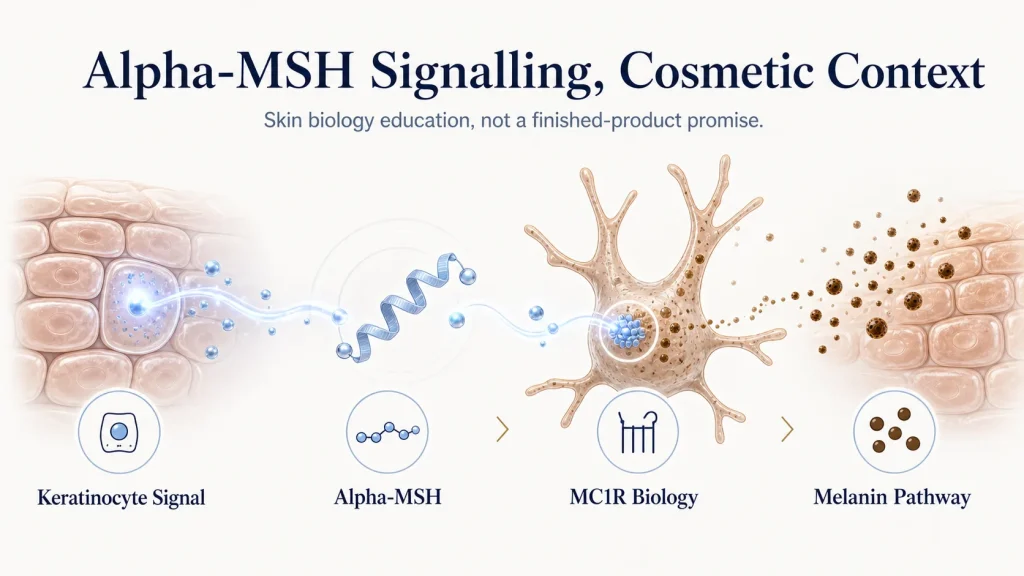
Pigmentation is not an isolated event inside a melanocyte. In the epidermis, keratinocytes can release local signals after environmental stress, and Alpha-MSH is one of the best-known messengers in that conversation. In physiology, Alpha-MSH interacts with melanocortin-1 receptor (MC1R) on melanocytes, linking upstream skin signals with the cAMP, PKA, CREB and MITF pathway that helps regulate melanogenic enzymes such as tyrosinase.
This pathway is useful for explaining why skin tone is a regulated biological process rather than a surface color effect alone. However, the language must remain precise. A mechanism diagram can say that Alpha-MSH is involved in melanogenesis biology; it should not imply that a topical cosmetic product has been proven to reproduce receptor-level physiology in human skin.
Why MC1R Biology Requires Claim Discipline
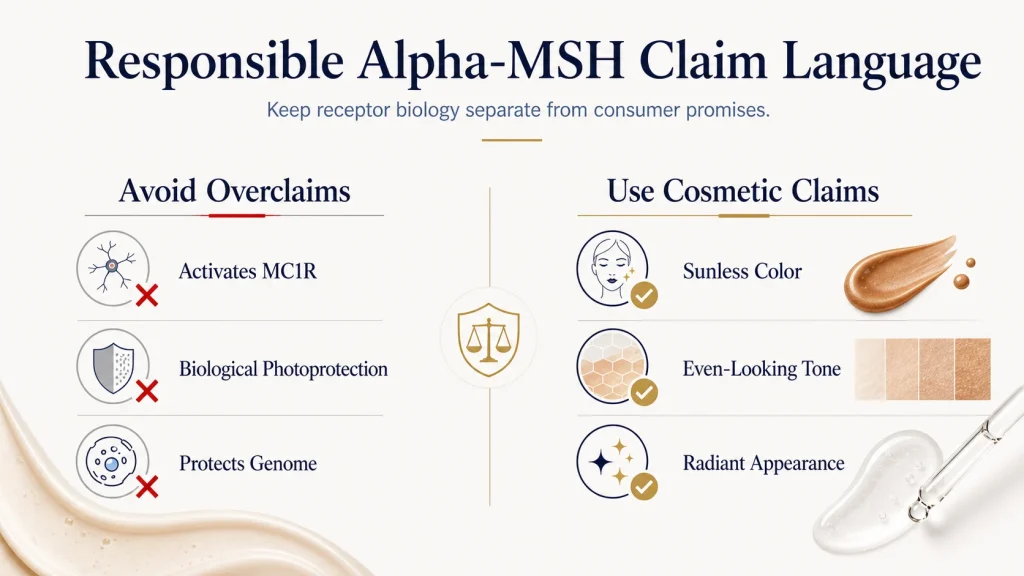
MC1R is receptor-level biology. Once an article or label implies receptor control, DNA-level defense or a sun-care substitute, the message can move toward drug-like or sunscreen-like territory. That is the main compliance problem in many Alpha-MSH-inspired drafts.
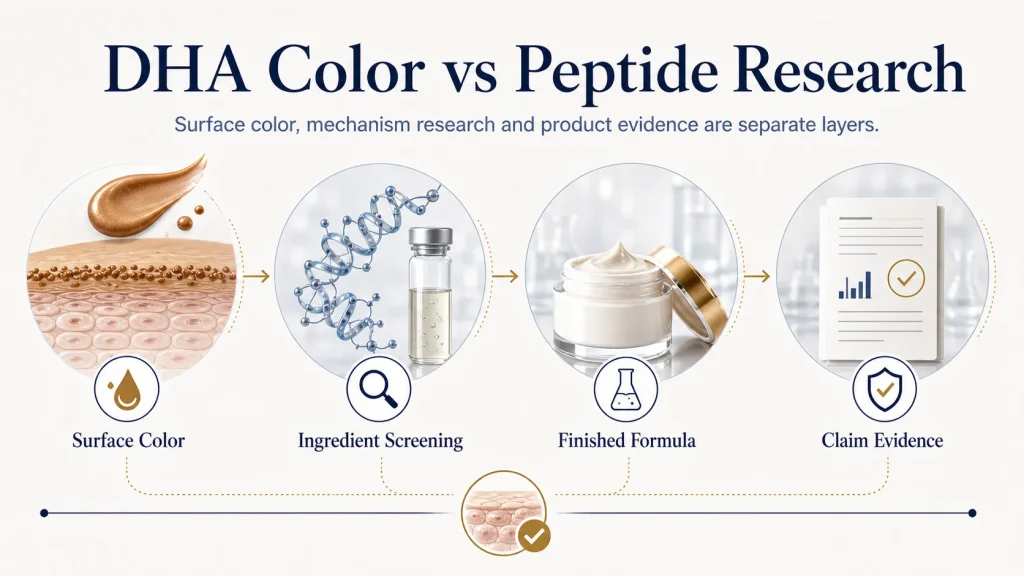
Ingredient research, cell models and pathway studies can support scientific understanding, but they are not the same as finished-formula efficacy. A responsible article should separate three levels: pathway biology, ingredient-screening data and substantiated cosmetic appearance claims. This separation protects the brand while making the science more credible.
DHA, Bronzers and Peptide Research Are Different Layers
Sunless-color products already have a clear cosmetic route. DHA creates a tanned-looking appearance by reacting with amino acids in the outer stratum corneum, while bronzers provide temporary tint that behaves more like makeup. These are surface-color technologies, and their evidence file should focus on color development, shade control, rub-off, odor, application feel and consumer-perceived naturalness.
Peptide research can sit beside this story as a pathway-inspired formulation narrative, especially for brands interested in skin tone, radiance and cosmetic science storytelling. It should not be used to promise inside-out tanning, DNA-level protection or sun-care benefits. A strong product concept can combine consumer-friendly color with a credible ingredient story, as long as each layer is described according to its real evidence level.
Product Development Checklist
Before turning Alpha-MSH biology into a launch concept, product teams should define the claim route first. The safest and most commercially useful concepts usually stay in cosmetic appearance language: gradual sunless color, even-looking tone, radiant appearance, smoother-looking skin surface and a more polished glow.
- Consumer promise: sunless color, even-looking tone, radiance or gradual warmth.
- Ingredient status: cosmetic peptide, DHA/bronzer, botanical, research ingredient or finished-formula system.
- Evidence level: in vitro, ex vivo, instrumental human testing, consumer perception or finished-formula substantiation.
- Formula readiness: pH, color drift, odor, staining, compatibility, packaging and stability.
- Claim boundary: no receptor-action claim, DNA-protection promise, sun-care substitute language or sun-defense implication unless the target-market regulatory pathway supports it.
Conclusion: Turn Melanocortin Science into Clearer Skin-Tone Products
Alpha-MSH remains one of the most important entry points for understanding melanocortin biology and skin tone regulation. For cosmetics, the opportunity is not to medicalize tanning or promise biological protection. The stronger opportunity is to build clearer skin-tone products: formulas that create attractive color or radiance, use mechanism research honestly, and support claims with evidence that matches the product format.
CTA
GENOPEP supports skincare brands exploring skin-tone, radiance and sunless-color concepts with cosmetic peptide ingredients, formulation guidance and technical documentation. Development support can be aligned with the intended product format, evidence plan and target-market claim requirements.
References
1. Slominski A., Wortsman J., Luger T., Paus R., Solomon S. Corticotropin releasing hormone and proopiomelanocortin involvement in the cutaneous response to stress. Physiological Reviews. 2004. https://doi.org/10.1152/physrev.00044.2003
2. Busca R., Ballotti R. Cyclic AMP a key messenger in the regulation of skin pigmentation. Pigment Cell Research. 2000. https://doi.org/10.1034/j.1600-0749.2000.130203.x
3. Brenner M., Hearing V.J. The protective role of melanin against UV damage in human skin. Photochemistry and Photobiology. 2008. https://doi.org/10.1111/j.1751-1097.2007.00226.x
4. D’Orazio J.A. et al. Topical drug rescue strategy and skin protection based on the role of Mc1r in UV response. Nature. 2006. This is cited as pathway/drug-development context, not cosmetic substantiation. https://doi.org/10.1038/nature05098
5. U.S. Food and Drug Administration. Sunless Tanners & Bronzers. https://www.fda.gov/cosmetics/cosmetic-products/sunless-tanners-bronzers