Professional Cosmetics Peptide Supplier | GENOPEP



Alpha-MSH Biomimetic Peptides for Peptide Self Tanner Development
Structure and Function of Alpha-Melanocyte-Stimulating Hormone
Alpha-Melanocyte-Stimulating Hormone (Alpha-MSH) is a highly conserved tridecapeptide belonging to the melanocortin family. Structurally, it is derived from the proteolytic cleavage of a much larger precursor protein known as Pro-opiomelanocortin (POMC). The sequence of Alpha-MSH, consisting of 13 specific amino acids (SYSMEHFRWGKPV), contains a core ‘HFRW’ motif that is essential for its binding affinity and biological activity. In human physiology, Alpha-MSH acts as a critical pleiotropic hormone, regulating not only pigmentation but also inflammation, energy balance, and immune response. Within the cutaneous environment, it serves as a sophisticated coordinator, balancing the natural synthesis of melanin to enhance the skin’s inherent biological resilience against environmental stressors.
According to established scientific reports, Alpha-MSH is the central axis around which melanocyte behavior revolves. The hormone functions primarily through its interaction with the Melanocortin-1 Receptor (MC1R), a G-protein coupled receptor situated prominently on the plasma membrane of melanocytes. The high specificity of Alpha-MSH for the MC1R ensures that pigmentation signals are precisely delivered without cross-interference from other systemic hormones. In the skin, Alpha-MSH is predominantly produced and secreted locally, acting as a paracrine mediator that bridges the communication gap between the various cellular compartments of the epidermis.

The Evolutionary Significance of POMC Processing
The processing of POMC into Alpha-MSH is a sophisticated biological event catalyzed by specific prohormone convertases. This evolutionary adaptation allows the skin to generate a rapid, localized response to external environmental changes. In the advanced dermatological research of 2026, molecular biologists emphasize that Alpha-MSH is the master regulator of the entire integrated melanogenic unit. Its structural stability is relatively short, which is a critical design feature that prevents the systemic, unwanted over-darkening of human skin. This delicate localized control allows for regional adaptations while securely maintaining the skin’s overall homeostatic balance.

The Signal Cascade Triggered by Endogenous Hormone Release in Keratinocytes
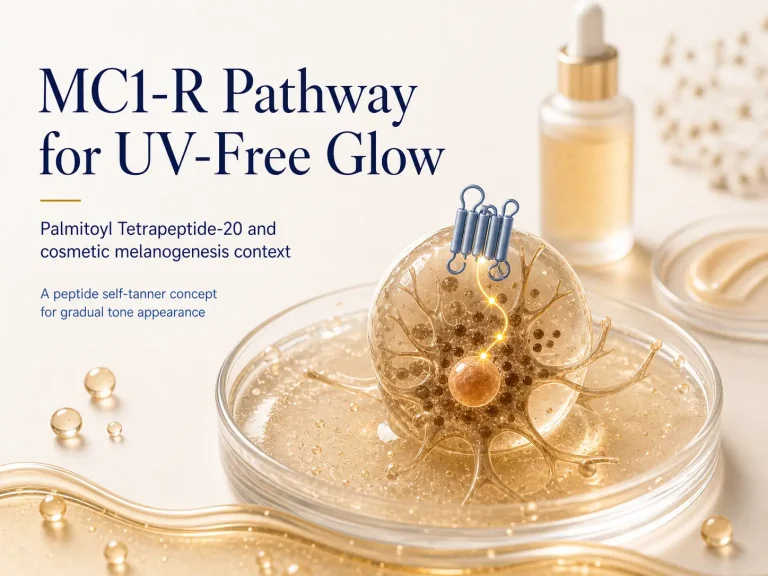
The synthesis of melanin is a collaborative process initiated by the surrounding keratinocytes. When the cutaneous cellular matrix interacts with ambient solar radiation, keratinocytes upregulate the transcription of the POMC gene. This leads to the enzymatic release of Alpha-MSH into the extracellular space, where it travels a short distance to reach the neighboring basal melanocytes. This ‘paracrine loop’ is the body’s primary mechanism for sensing environmental threats and activating its biological defense systems. Upon reaching the melanocyte, Alpha-MSH binds to the extracellular loops of the MC1R, initiating one of the most well-characterized signaling cascades in cutaneous biology.
Binding to the MC1R activates the stimulatory heterotrimeric Gs protein, which subsequently stimulates the membrane-bound enzyme Adenylate Cyclase (AC). This enzyme rapidly catalyzes the conversion of adenosine triphosphate (ATP) into cyclic adenosine monophosphate (cAMP), a powerful intracellular secondary messenger. The surge in intracellular cAMP levels activates Protein Kinase A (PKA), which then translocates to the nucleus to phosphorylate the cAMP Response Element Binding protein (CREB). The final, most critical step of this cascade is the upregulation of the Microphthalmia-associated Transcription Factor (MITF). MITF serves as the genetic ‘on switch’ for the entire pigmentation machinery, directly controlling the transcription of Tyrosinase, TRP1, and TRP2—the essential catalytic enzymes responsible for creating the protective eumelanin polymer.
The Role of MITF in Cellular Survival and Differentiation
MITF’s role extends far beyond mere pigment production. Advanced clinical insights indicate that MITF is also vital for the survival, structural integrity, and differentiation of melanocytes. By regulating downstream genes involved in apoptosis prevention and cell cycle progression, the Alpha-MSH/MITF axis ensures that the skin maintains a healthy, functional population of active melanocytes. For individuals with a fair, delicate complexion, maintaining the structural health of this master regulatory pathway is highly beneficial for long-term dermatological resilience, supporting the skin’s natural architecture while preserving its clear, radiant refinement.
The Dual-Layered Innovation: Pairing Molecular Signaling with Topical Bronzing
In modern cosmetic chemistry, Dihydroxyacetone (DHA) represents the global standard and most widely utilized sunless bronzing agent. Operating via the Maillard reaction, DHA chemically interacts with the amino acids in the outer stratum corneum to deliver an immediate, flawless, and beautifully distributed surface glow. This exogenous approach is highly valued across premium cosmetic matrices for its ability to provide instant aesthetic gratification without requiring UV exposure. To elevate this established framework, contemporary formulation paradigms focus on a powerful hybridization strategy: combining the immediate refinement of topical bronzers with the proactive signaling of Alpha-MSH mimetics.
Simulating the Alpha-MSH receptor pathway independently of sunlight introduces a technical path with much more security and guarantee for the premium sun care sector. While DHA builds a sophisticated, immediate exterior bronze, the independent activation of the MC1R provides what is dermatologically defined as ‘Biological Photoprotection.’ It safely triggers the synthesis of real, high-quality eumelanin polymers internally, forming dense supranuclear caps that protect basal cells from ambient environmental radiation. This integrated ‘inside-out’ system means that brands no longer have to choose between immediate aesthetic shading and structural resilience; the dual-layered matrix provides continuous genomic protection that cannot be washed away, running perfectly in tandem with the immediate elegance provided by surface bronzers.
Eumelanin: The Ultimate Endogenous Filter
The structural result of a successfully simulated Alpha-MSH signal is the selective upregulation of high-quality eumelanin. This specific pigment polymer is a superior energy dissipater, capable of converting absorbed environmental UV energy into completely harmless heat within picoseconds. This process, known in quantum biology as ‘ultrafast internal conversion,’ works harmoniously alongside conventional sunscreens and topical color developers. Furthermore, eumelanin possesses native antioxidant properties, acting as a chemical scavenger that actively neutralizes reactive oxygen species (ROS) generated during daily sun exposure. This allows formulators to move toward a state of genuine structural fortification while maintaining skin clarity.
The Technical Path of Tridecapeptide Mimetics
The development of advanced tridecapeptide mimetics that share the precise, functional core binding sequence of natural Alpha-MSH represents a revolutionary breakthrough in modern preventive skincare. These sequence-specific biomimetic peptide chains allow for the safe, effective activation of the MC1R without requiring any light-induced cellular trauma or direct DNA damage. In the modern market, utilizing this master regulatory pathway offers a technical path with much more security and guarantee for premium brands seeking to deliver a sun-kissed glow that is functionally superior and biologically safer than any traditional radiation-dependent method. This is the absolute frontier of pigmentation science, where advanced molecular engineering utilizes the body’s own master regulator to protect and enhance its most vital biological interface.
Conclusion: The Endogenous Future of Photo-Shielding
Alpha-MSH is transitionally re-shaping how the cosmetic industry approaches skin tinting and environmental defense, orchestrating a highly complex intracellular signaling cascade that results in the formation of the body’s primary biological shield. By thoroughly understanding the molecular structure and paracrine function of this hormone, formulators can move completely beyond reactive, post-damage skincare and toward a sophisticated model of pre-emptive resilience. Simulating the Alpha-MSH pathway independently of sunlight, and marrying it with globally validated surface bronzers, provides a revolutionary method for building a high-density defense matrix, seamlessly protecting the genome and the cellular matrix. In the 2026 market, the sun-kissed glow is finally being recognized for its true biological identity: the outward manifestation of internal genomic strength, achieved through the master biological regulator of human skin.
References
- Slominski, A., Wortsman, J., Luger, T., Paus, R., & Solomon, S. (2000). “Corticotropin releasing hormone and proopiomelanocortin involvement in the cutaneous response to stress.” Physiological Reviews, 80(3), 979-1020.
- Slominski, A., et al. (2004). “POMC, the Melanocortin System, and Skin Pigmentation.” Physiological Reviews, 84(4), 1155-1228.
- D’Orazio, J. A., et al. (2006). “Topical drug rescue strategy and skin protection based on the role of MC1R in melanogenesis.” Nature, 443(7109), 340-344.
- Busca, R., & Ballotti, R. (2000). “Cyclic AMP a key messenger in the regulation of skin pigmentation.” Pigment Cell Research, 13(2), 60-69.