Professional Cosmetics Peptide Supplier | GENOPEP



The Hidden Cost of Single-Peptide Formulas: Why Anti-Aging Peptide Complexes Win in 2026
The “Label Claim” Trap
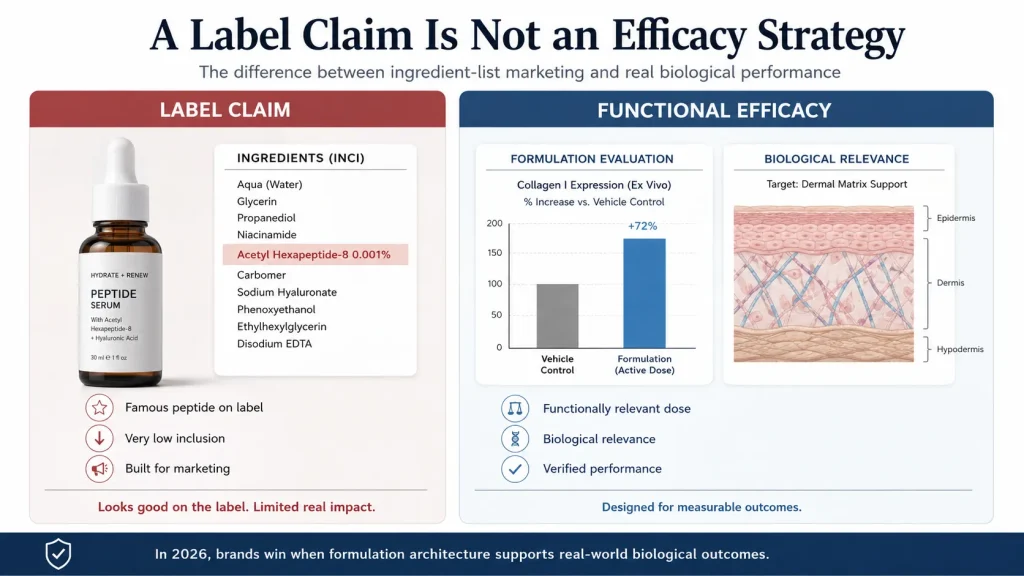
In the competitive world of skincare B2B, the race to include the “next big peptide” on the ingredient list is relentless. Brands often rush to add a single, famous molecule—like Acetyl Hexapeptide-8 or Copper Tripeptide-1—at a minimal percentage just to satisfy a marketing claim.
But there is a hidden cost to this strategy. When you build a product around a single peptide, you are often paying for a “label claim” rather than actual skin transformation. As we move into 2026, the question for brand owners is no longer “Which peptide is in your bottle?” but “How does that peptide interact with the biological system of the skin?”
The Biological Reality: Skin is Not a Single-Note Instrument
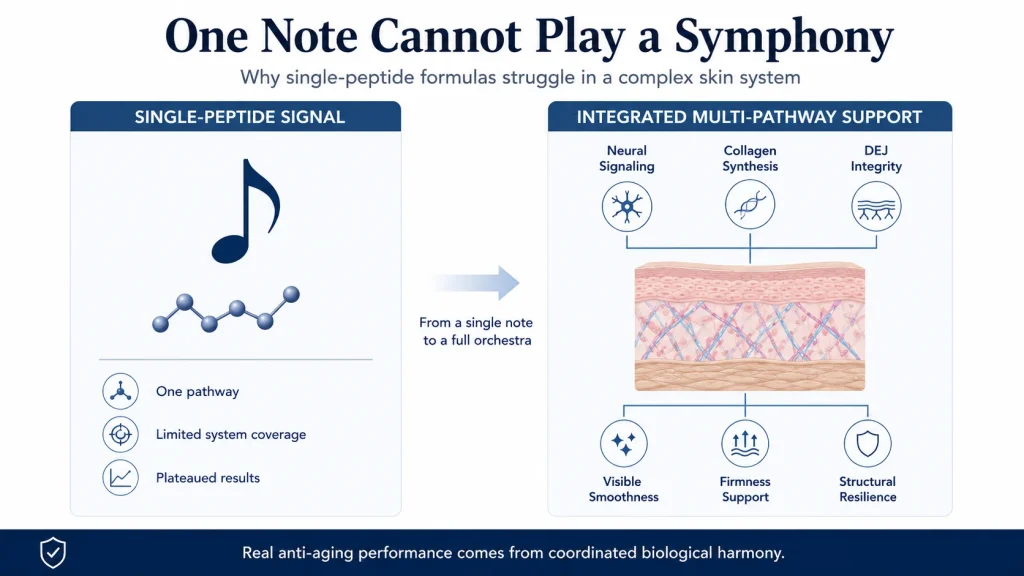
The human skin is a complex, multi-layered ecosystem. Wrinkles are not caused by one single failure; they are the result of a breakdown in multiple biological pathways: neural signaling, collagen synthesis, and the integrity of the Dermal-Epidermal Junction (DEJ).
When a formulator uses a single peptide, they are sending a single signal to a complex system. It’s like trying to play a symphony with only one note. No matter how loud you play that note (or how high the concentration), it will never achieve the harmony of a full orchestra. This “single-note” approach leads to plateaued results and, eventually, a loss of consumer trust.
The R&D Waste: The Technical Burden of Manual Mixing
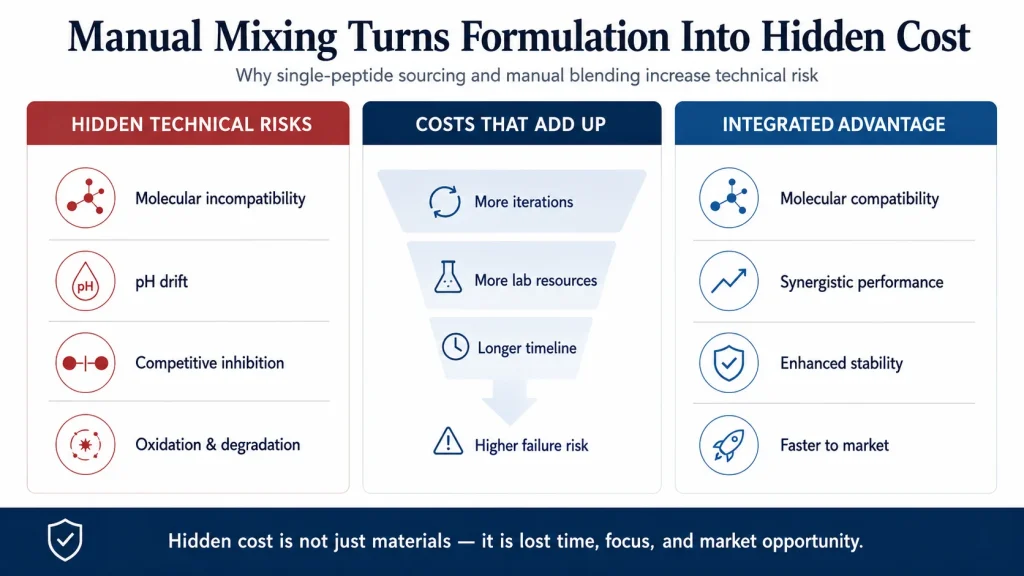
Beyond biological efficacy, there is a technical cost. Many R&D teams spend months attempting to “bridge the gap” by manually mixing multiple individual peptides. They buy a neuro-inhibitor from one supplier and a matrix-builder from another.
This leads to several hidden technical risks:
- Molecular Incompatibility: Different peptides often require different pH levels and solvent systems to remain stable.
- Competitive Inhibition: Without precise molecular architecture, peptides can sometimes interfere with each other’s bio-availability.
- Oxidation and Degradation: Single peptides are often highly sensitive to environmental factors during the blending process.
The hours spent troubleshooting these issues represent a massive “hidden cost” in time-to-market and laboratory resources.
The 2026 Solution: Integrated Molecular Matrices
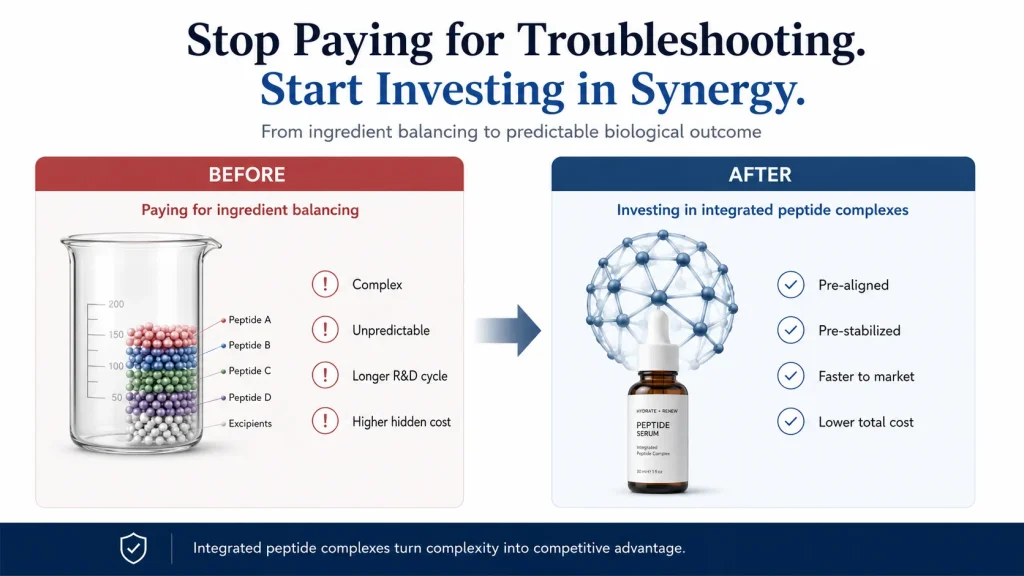
The industry’s most innovative labs are now moving away from individual peptide sourcing. Instead, they are adopting Integrated Molecular Matrices.
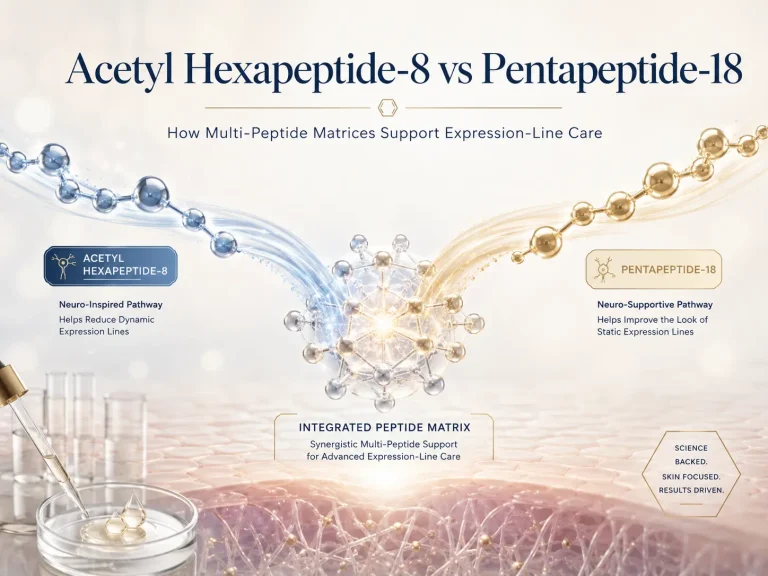
An integrated matrix is not just a mixture; it is a pre-stabilized solution where the neuro-relaxing components and the structural-rebuilding components are already aligned at a molecular level. This “Dual-Axis” design ensures that the signals reach the skin simultaneously and synergistically.
By using an integrated complex, brands reduce their R&D risk and ensure that every drop of the formula delivers the efficacy promised on the box. You stop paying for the struggle of balancing ingredients and start paying for a guaranteed biological outcome.
Conclusion: Investing in Synergy
In 2026, the brands that succeed will be those that prioritize Synergy over Singulars. The hidden cost of a cheap, single-peptide formula is the potential failure of the entire product line.
If you want to build a “Hero Product” that dominates the premium anti-aging market, it is time to look past the marketing hype and invest in the architecture of the formula itself.