Professional Cosmetics Peptide Supplier | GENOPEP



How Molecular Weight Affects Peptide Skin Absorption in Skincare Formulas
Whether an active ingredient can be effective in a high-efficacy skincare product depends not only on its level of biological activity. It also needs to be used in the right formulation system, at the right concentration, in the right dosage form, and for the right application scenario.
For cosmetic peptides, brands often ask one key question:
Does molecular weight really matter?
The answer is yes.
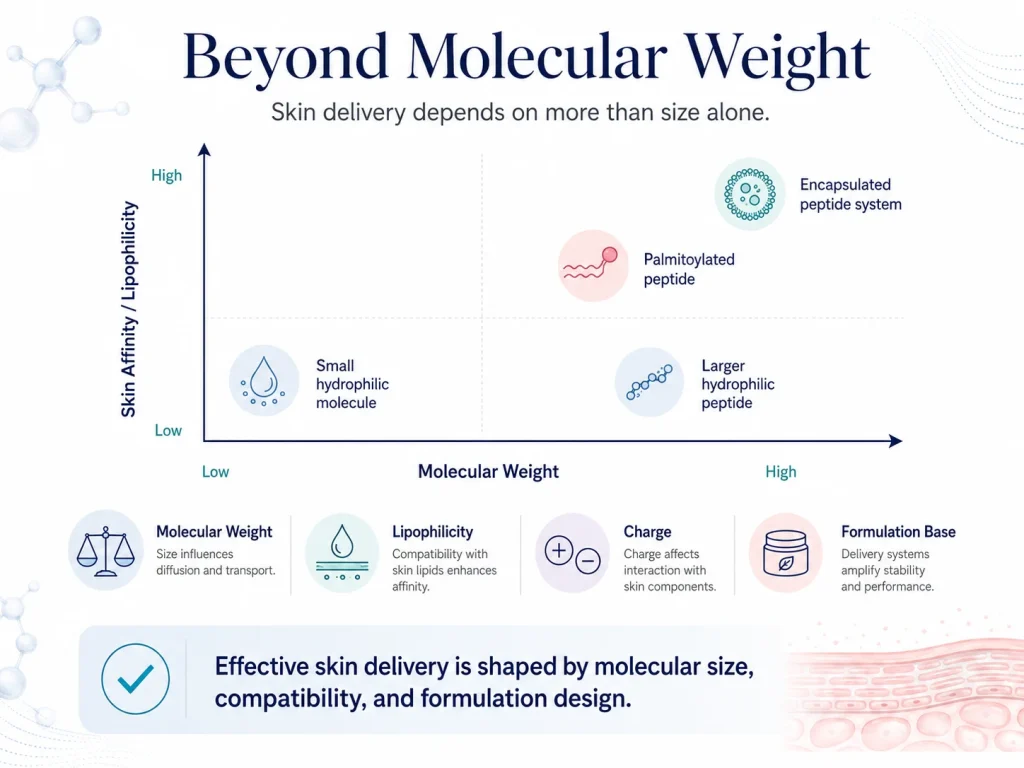
But molecular weight is not the only deciding factor. It is one part of a much broader formulation strategy.
1. The “500 Dalton Rule” and Peptides
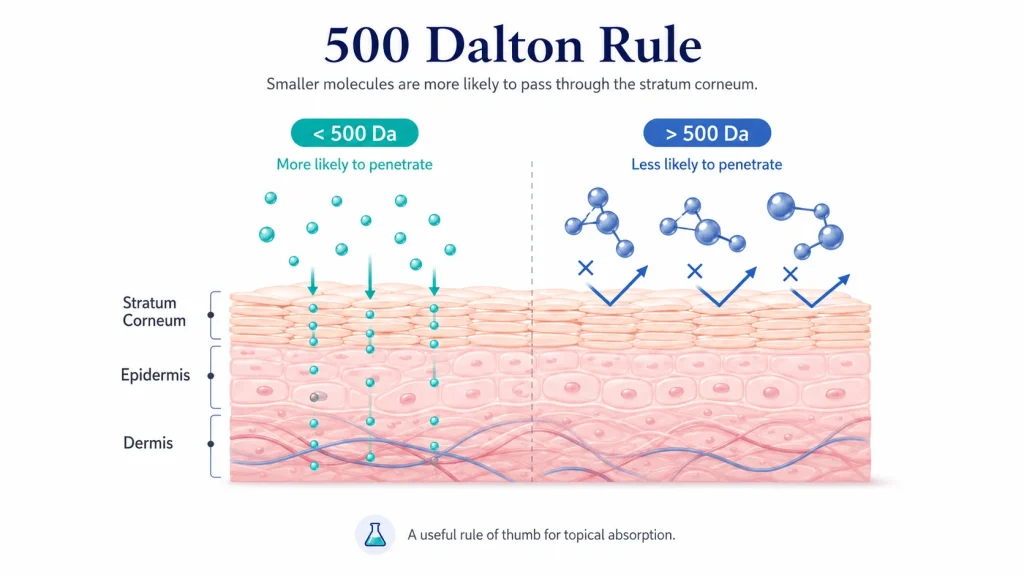
In skin science, the “500 Dalton Rule” refers to the idea that molecules with a molecular weight above 500 Da generally have more difficulty passing through intact skin, especially the stratum corneum, the outermost layer of the skin.
This rule is not an absolute law, but it is a useful reference point when evaluating cosmetic ingredients.
Many peptides used in skincare have a higher molecular weight than typical small-molecule actives. This means their real-world performance depends not only on what the peptide is, but also on how it is designed, processed, and incorporated into the final formula.
For example, smaller peptides such as dipeptides and tripeptides usually have a relatively lower molecular weight, which can make them easier to work with from a delivery and formulation perspective.
Example:
Copper Tripeptide-1 is one of the more commonly used small peptides in cosmetic formulations. It is also one of the most widely studied peptide ingredients in skincare applications.
2. Molecular Weight Is Not the Only Factor
Molecular weight matters, but it should not be considered in isolation.
The skin barrier is lipid-rich, so an ingredient’s compatibility with water-based systems, oil-based systems, and the overall formulation base can also influence how it behaves in the product and on the skin.
This is why some peptides are modified by attaching fatty acid chains, such as palmitoyl groups. This type of modification can improve a peptide’s compatibility with cosmetic bases and may help it behave more stably and appropriately within the formulation and on the skin surface.
Example:
Palmitoyl Pentapeptide-4 is a common palmitoylated peptide. The introduction of a palmitoyl group helps improve its formulation compatibility and skin affinity.
3. From Peptide Ingredient to Formulation Solution
At GENOPEP, we do not only supply peptide ingredients. We focus more on how a peptide can be practically applied in a real cosmetic formula.
For peptide-based skincare, the key question is not simply:
“What is this peptide?”
The more important question is:
“Can this peptide be used stably, appropriately, and effectively in the final formulation?”
When developing peptide solutions, we usually consider multiple factors, including:
- molecular weight
- water solubility or oil-phase compatibility
- charge characteristics
- stability within the formula
- compatibility with the base system
- appropriate usage level
- the final product format, such as serum, cream, or home-use treatment products
For larger peptides, it should not be assumed that they can easily penetrate the skin. A more practical approach is to use formulation design to support their stability, compatibility, and overall product performance.
This is where peptide R&D experience and formulation expertise become truly valuable.
4. How GENOPEP Helps Brands Solve Peptide Application Challenges
For brands looking to improve the performance of peptide-based products, we mainly provide two types of practical support.
1. Optimized Base Solutions
GENOPEP Lab can help brands develop base systems that are better suited for peptide applications. This may include emulsion systems, encapsulation approaches, texture adjustment, or stability optimization, all aimed at improving the compatibility and performance of peptides in the final product.
2. Custom Peptide and Formula Development
If an existing catalogue peptide does not fully meet a brand’s formulation needs, we can also provide custom development support. This may include peptide selection, sequence adjustment, concentration planning, and formulation compatibility testing.
Conclusion
Molecular weight is an important factor in peptide skincare, but it is not the whole story.
The actual performance of a peptide in a cosmetic product depends on many factors, including molecular size, structural characteristics, formulation compatibility, stability, usage level, and the final delivery system.
For skincare brands, the real goal is not simply to choose a popular peptide. It is to place the right peptide into a stable, suitable formulation system that can support the intended skin benefits.
This is where GENOPEP can create value — from peptide selection to complete formulation solutions.