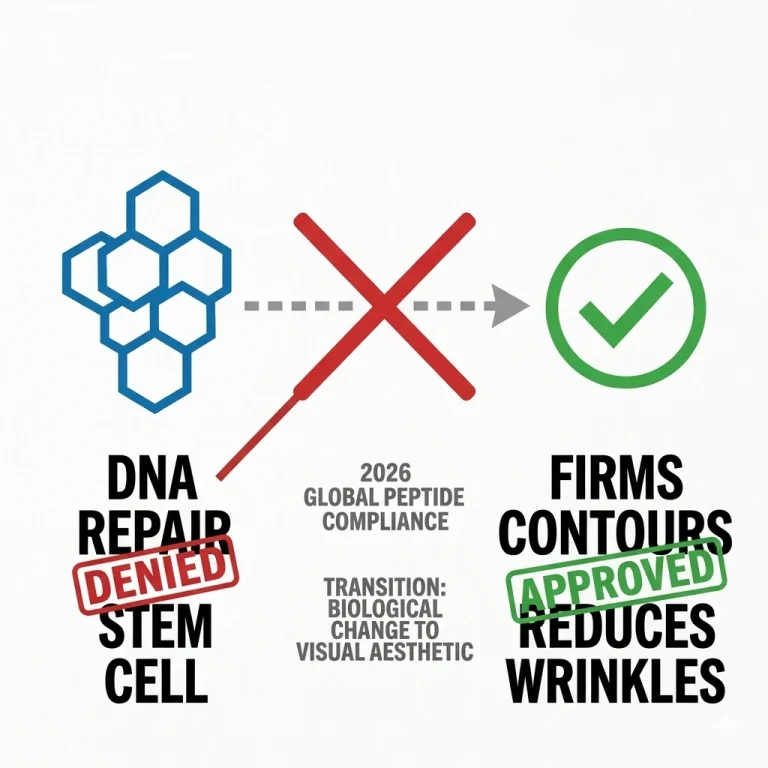
Professional Cosmetics Peptide Supplier | GENOPEP



Exosomes Are Trending, but Peptide Matrices Are the Smarter B2B Bet
The Shiny New Object: The Exosome Fever
By 2026, exosomes have become one of the most discussed buzzwords across beauty trade shows and skincare innovation conversations. These tiny cellular messengers are being positioned as a new frontier in skincare, promising a more advanced regenerative care story. To many brand owners, they look like a powerful marketing magic wand.
But behind the hype, a quieter and more commercially practical shift is taking place. While many brands are chasing exosomes, more stable players in the industry are focusing on a more controllable, verifiable, and scalable technology route: Integrated Peptide Matrices.
The Reality Check: The 3 Major Hurdles of Exosomes
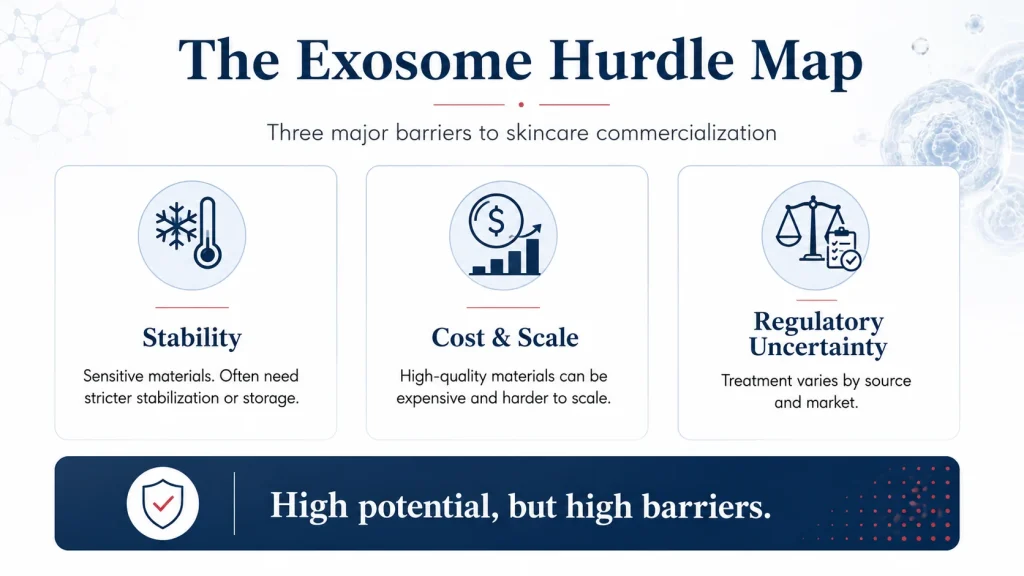
For a B2B skincare brand, a “miracle ingredient” is only useful if it can reach the consumer in a stable, compliant, and reproducible form. Exosomes, despite their potential, still face three practical hurdles in skincare commercialization:
1. Stability Challenge:
Exosomes are complex biological nano-vesicles. Depending on their source, processing method, and final dosage form, exosome-based ingredients may require strict storage conditions, stabilization strategies, or encapsulation technologies to preserve activity. For a brand, a product that loses its activity during storage, shipping, or consumer use creates a serious commercial risk.
2. Cost and Scalability:
High-quality, purified, and well-characterized exosome materials are often expensive. For small and mid-sized brands, this can limit practical use levels in formulations and may push some brands toward low-inclusion strategies that are easier to market than to validate biologically.
3. Regulatory Uncertainty:
Why Peptide Matrices Are Becoming the Smarter Bet
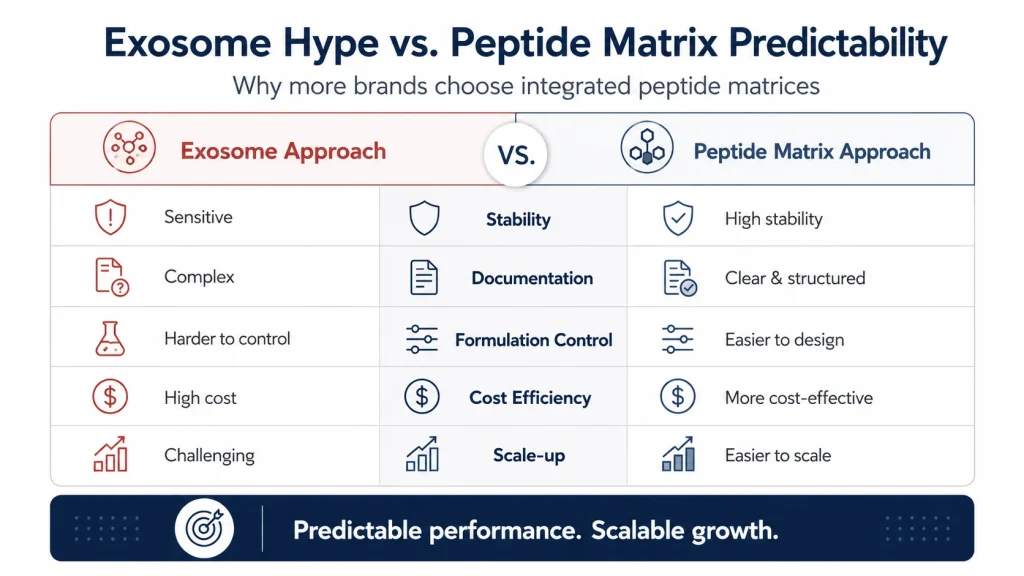
Smart brands are realizing that a science-led anti-aging story does not always need to rely on highly complex and difficult-to-control biologic materials. What matters is whether the brand can build a stable, verifiable, and scalable system of “Integrated Biology.”
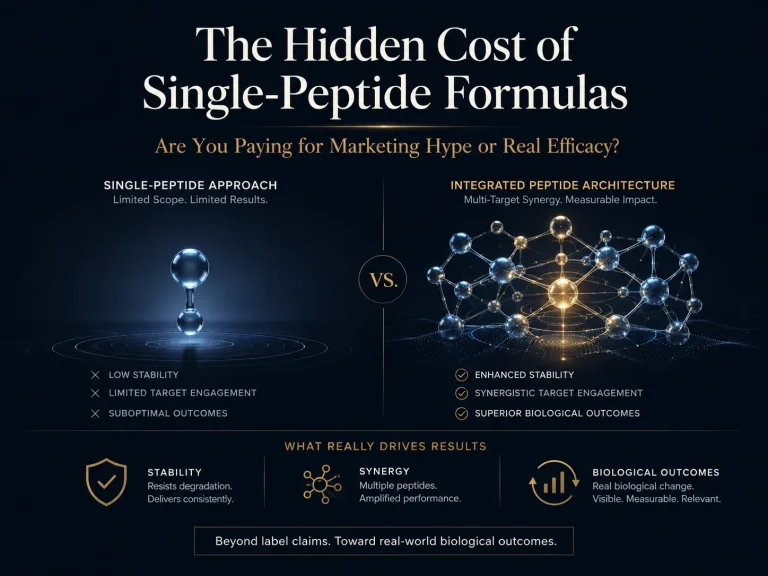
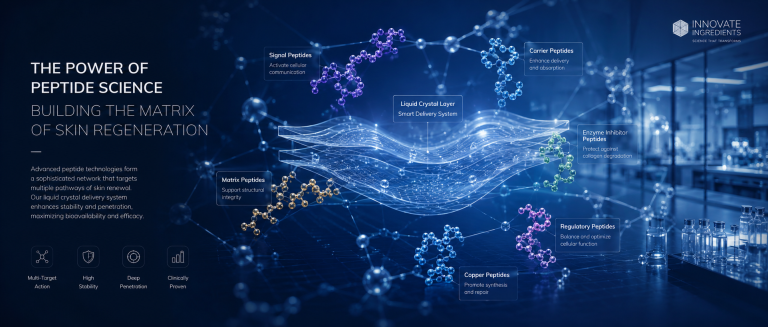
Modern peptide technology has moved beyond the simple addition of single molecules. A well-designed peptide matrix does not attempt to replicate the full biological complexity of exosomes. Instead, it offers a more controlled way to support selected skin-relevant signaling pathways. Compared with highly complex biologic vesicle systems, an Integrated Peptide Matrix is often easier to formulate, stabilize, document, and scale for global product development.
The Power of the Integrated Matrix
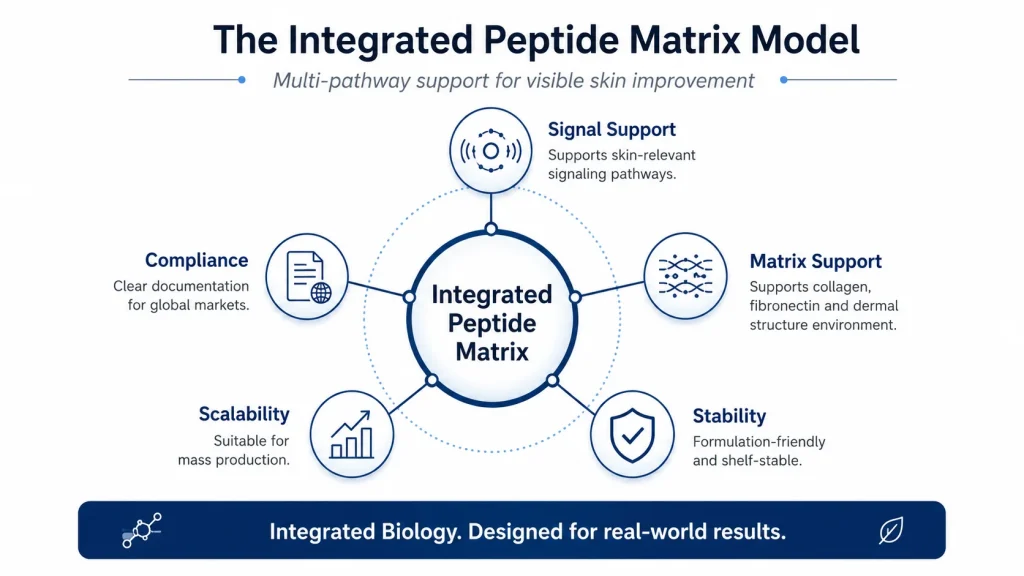
While exosomes attempt to deliver a complex biological message package, an Integrated Peptide Matrix focuses on a clearer and more controllable multi-pathway support logic. For anti-aging product development, this route is easier to translate into a stable B2B formulation solution.
Axis 1:
Through neuropeptide-inspired signaling support, it helps improve the appearance of expression-related lines and gives brands a clearer story around dynamic wrinkle care.
Axis 2:
Through matrix-supporting peptide combinations, it helps support the skin’s structural environment, including pathways associated with collagen, fibronectin, and dermal support. This gives brands a more complete technical logic for long-term firmness and elasticity care.
This integrated approach gives brands a more predictable and formulation-friendly route for anti-aging product development. Instead of relying on the story of one trendy ingredient, it helps brands build stronger hero products through stability, synergy, and verifiability.
Conclusion: Be a Scientist, Not a Trend-Chaser
The brands that dominate the anti-aging category in 2027 will not simply be those that chase every trending ingredient. The brands with long-term shelf power will be those that invest in stability, synergy, verifiability, and scalability.
Exosomes offer a powerful marketing story today, but Integrated Peptide Matrices provide a more stable technical foundation for the hero products of tomorrow.