Professional Cosmetics Peptide Supplier | GENOPEP



Is “Digital Stress” Making Your Customers Age Faster? The Neuro-Skin Breakthrough Your R&D Team Can’t Ignore
The New Face of Aging: “Tech-Face”
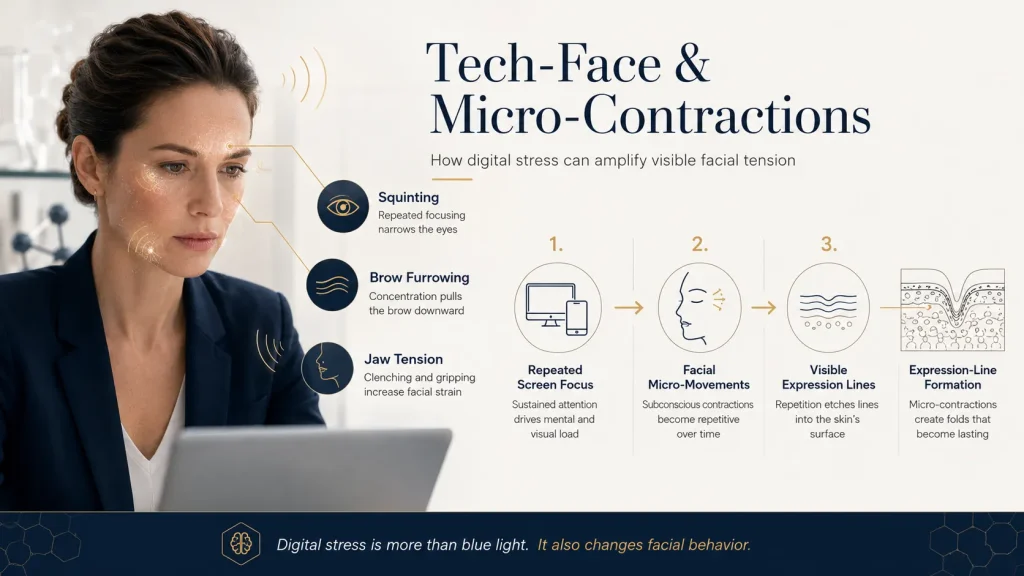
Look around any office or café in 2026. Every consumer is tethered to a screen. While the industry has spent years discussing “Blue Light” protection, a much more aggressive aging factor has emerged: Digital Stress.
Recent dermatological studies have identified a phenomenon called “Tech-Face”—a specific pattern of premature aging caused by the constant micro-contractions of facial muscles during screen use. Whether it is squinting at small text or the unconscious brow-furrowing of deep concentration, our digital lives are etching wrinkles into our skin faster than ever before.
The Brain-Skin Connection: More Than Just Surface Deep
To solve this, R&D teams must understand a fundamental biological truth: the skin and the brain are made of the same embryonic tissue. They are constantly “talking” to each other.
Digital stress triggers the brain to send continuous “contraction” signals to the facial nerves. Over time, these signals don’t just cause temporary expression lines; they cause a state of chronic micro-stress in the skin cells. This stress inhibits collagen production and breaks down the dermal matrix. Standard anti-aging creams that only focus on surface hydration or simple collagen boosting are failing because they ignore the source of the problem: the Neuro-Signal.
The Breakthrough: From Surface Repair to Neuro-Modulation
The most innovative brands in 2026 are moving toward a Neuro-Skin approach. The goal is no longer just to “fill” a wrinkle, but to modulate the communication between the nerves and the skin.
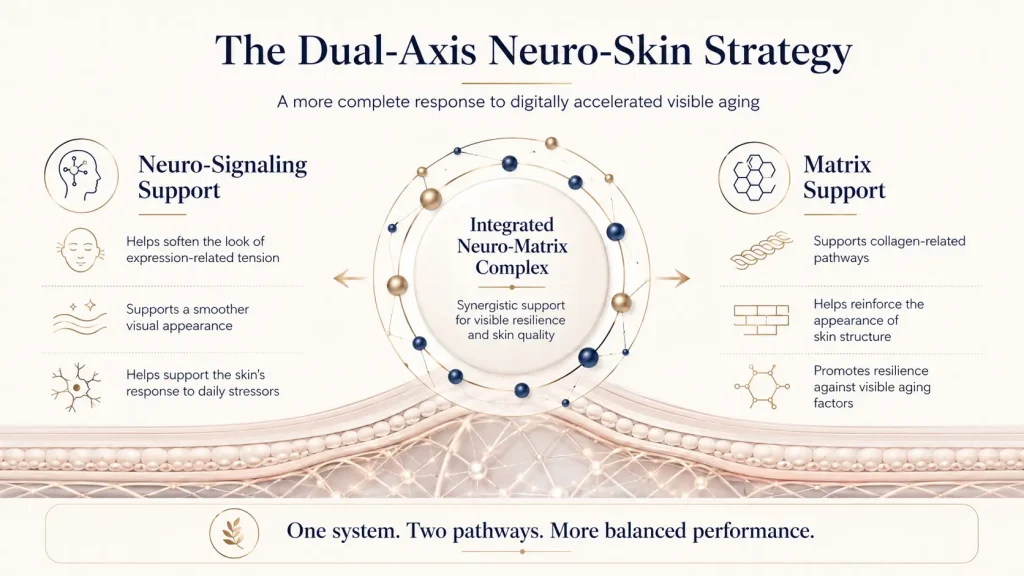
This breakthrough relies on a Dual-Axis strategy.
- The Instant Relaxation Axis: By utilizing specific molecules that intercept the neuro-signals caused by digital stress, we can “relax” the skin’s micro-contractions instantly.
- The Long-term Matrix Axis: Simultaneously, we must provide the skin with the architectural tools to rebuild its matrix, repairing the damage caused by years of “Tech-Face.”
Why “Dual-Axis” is the Future of R&D
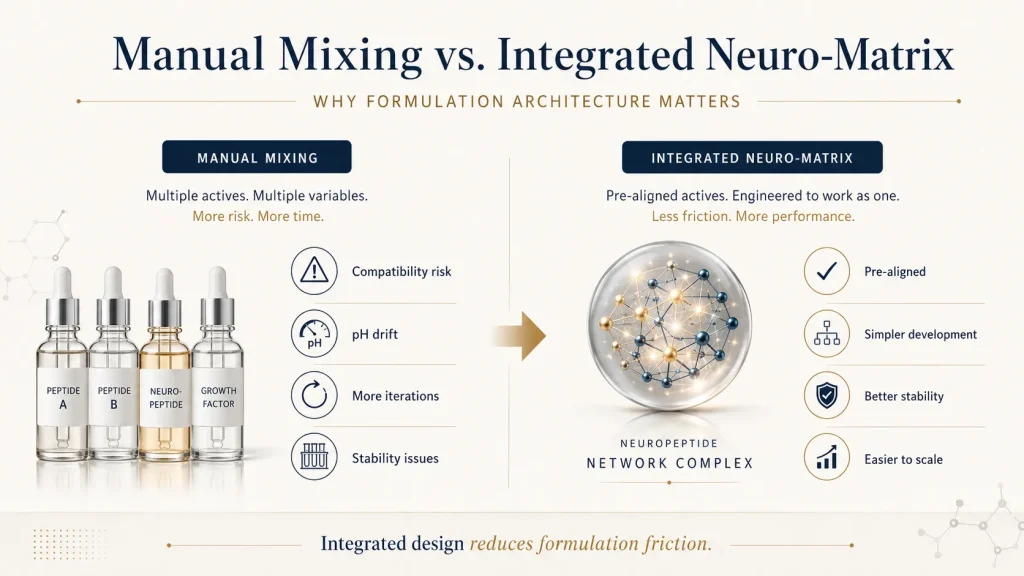
For years, formulators had to choose between “Instant Smoothers” and “Long-term Repair.” In the digital age, the consumer demands both. However, manually mixing different peptides to achieve this balance is technically risky and often leads to instability.
The current gold standard is moving toward Integrated Neuro-Matrix complexes. These are molecularly pre-aligned systems that handle both axes within a single solution. By adopting this “Dual-Axis” architecture, brands can offer a product that feels like an “instant filter” while delivering the clinical, deep-tissue repair that creates lifelong customers.
Conclusion: Is Your Brand Ready for the Digital Generation?
The aging process has changed. The way we treat it must change too. If your anti-aging line is still relying on 2010-era chemistry, you are missing the most significant growth opportunity in modern skincare.
The “Neuro-Skin” revolution is here. It’s time to stop looking at the skin as a simple barrier and start treating it as the sophisticated, nerve-connected organ it truly is.