Professional Cosmetics Peptide Supplier | GENOPEP



Why Do Facial Expressions Turn Into Wrinkles Over Time?
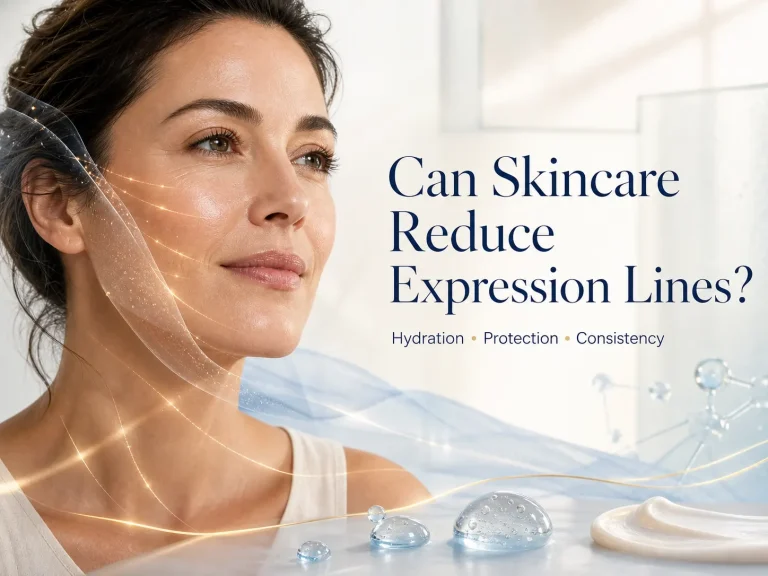
Facial expressions create temporary lines because muscle movement repeatedly folds the skin in predictable areas. As the skin’s elasticity, hydration and structural support change over time, some folds may remain visible after the face relaxes. Facial movement is therefore one contributor to wrinkles, but aging, UV exposure, smoking, genetics and other factors also influence the process.
Introduction
Expression lines are sometimes reduced to a simple warning: smile less, frown less and the face will stay smooth. That is neither a useful skincare message nor a complete explanation of wrinkle biology. Facial movement is normal communication, and the skin is designed to bend with it.
The more relevant question is what happens where the same areas fold repeatedly, and why a line that once disappeared at rest may later remain visible. Understanding what causes expression lines helps skincare brands separate normal movement from the wider changes that make a crease more persistent.
What Causes Expression Lines?
Facial Movement Repeatedly Folds the Skin
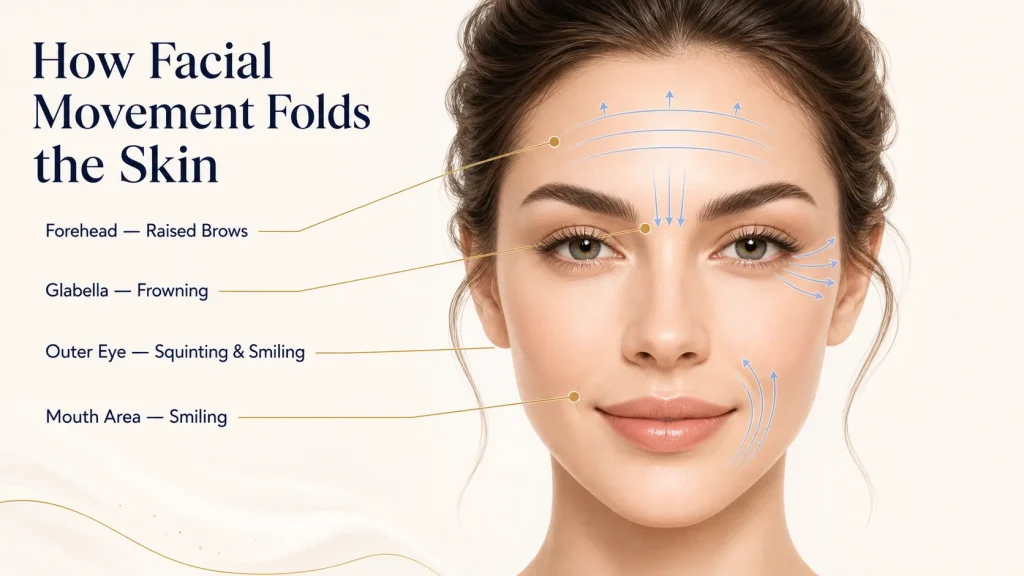
When a person smiles, squints, frowns or raises the eyebrows, facial muscles change the shape of the overlying tissue. The skin compresses in some directions and stretches in others. Because the same muscles are recruited for the same expression, the folds tend to return to recognizable locations.
Horizontal forehead lines appear when the brows rise. Glabellar lines develop between the eyebrows during frowning or concentration. Crow’s-feet radiate from the outer eye as the eye area narrows during a smile. Lines around the mouth reflect another set of repeated movements. DermNet describes these movement-dependent furrows as dynamic lines.[1]
Expression Lines Are Normal, Not Skin Damage
The fold itself should not be described as an injury. Dynamic facial lines can be visible in young skin and may fade almost completely when the expression ends. Their presence does not automatically mean premature aging, poor skincare or a need for treatment.
For product teams, this distinction matters. A responsible expression line skincare concept can acknowledge a consumer concern without suggesting that smiling, laughing or other normal expressions are undesirable.
Why Temporary Expression Lines Can Become More Persistent
Fold, Release and Rebound
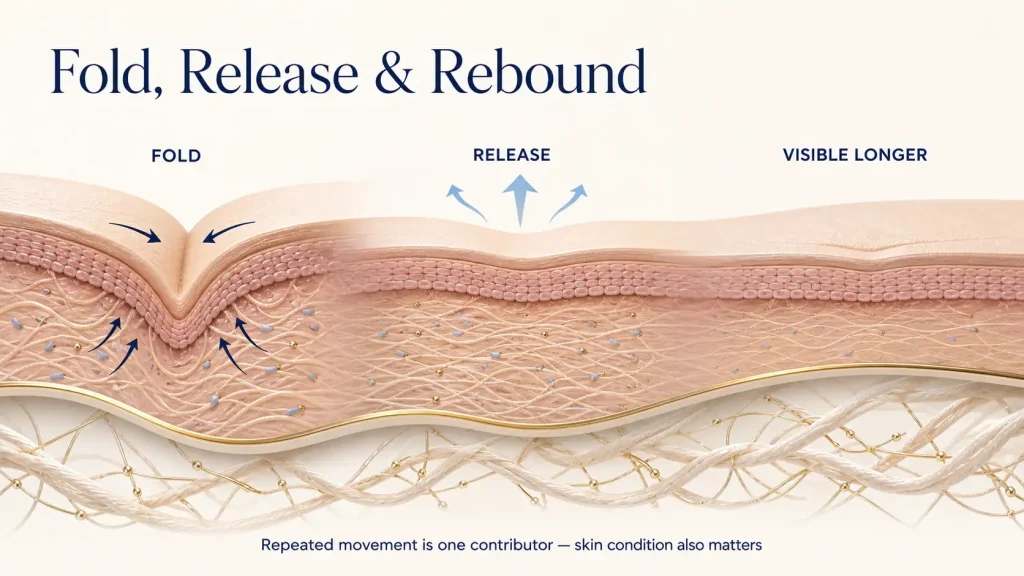
After an expression stops, the skin usually moves back toward its resting position. How completely and how quickly it rebounds depend on the properties of the skin at that time. Hydration, elasticity, thickness, structural support and the condition of the surface all affect how a fold looks after release.
With age and cumulative environmental exposure, skin generally becomes thinner, drier and less elastic. Collagen and elastin support changes, and the surface may not recover from repeated flexing in exactly the same way. Mayo Clinic and Cleveland Clinic both identify repeated facial expressions alongside aging, UV exposure and other factors in wrinkle development.[2][3]
Facial Movement → Repeated Folding → Release and Rebound → A Line That May Remain Visible for Longer
What Long-Term Research Shows
An eight-year longitudinal study followed 122 women aged 10 to 72 and compared standardized facial images with and without smiling. The expression-line pattern recorded at baseline predicted the pattern of persistent wrinkles visible without expression eight years later. The study also reported that factors such as skin hydration and life stage were associated with different rates of progression.[4]
This research supports a relationship between repeated skin flexure and where persistent wrinkles later appear. It does not mean that every expression line becomes fixed or that a study can predict an individual’s exact timeline. The authors were Procter & Gamble employees, and the study was funded by Procter & Gamble, which should be disclosed when the evidence is used.[4]
Are Expression Lines the Same as Wrinkles?
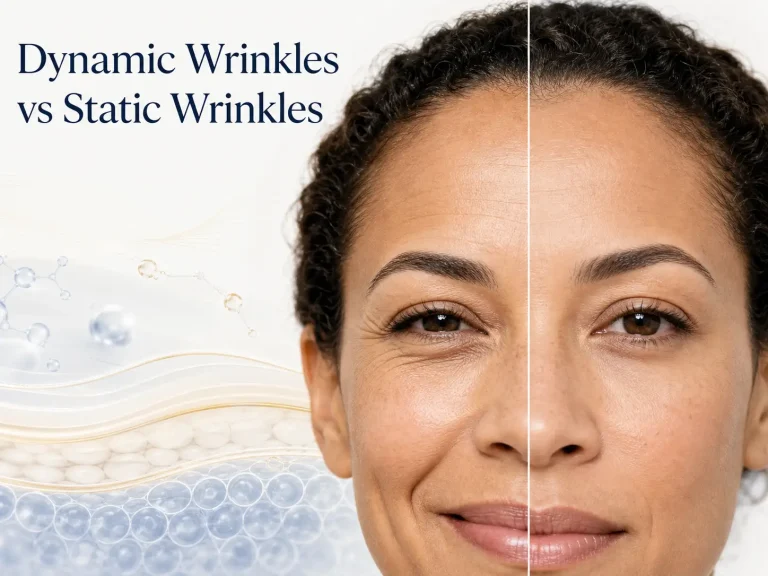
“Wrinkle” is a broad term for lines, creases or furrows in the skin. “Expression line” is more specific: it points to a line associated with repeated facial movement. Early expression lines may be visible mainly during movement, while a more persistent line remains noticeable after the face returns to rest.
The terms therefore overlap, but they are not interchangeable in every context. An expression line describes an origin or visible behavior; a persistent wrinkle describes what remains at rest. For the full classification, skincare teams can refer to the companion article on dynamic wrinkles vs static wrinkles once it is published.
Do Facial Expressions Cause All Facial Wrinkles?
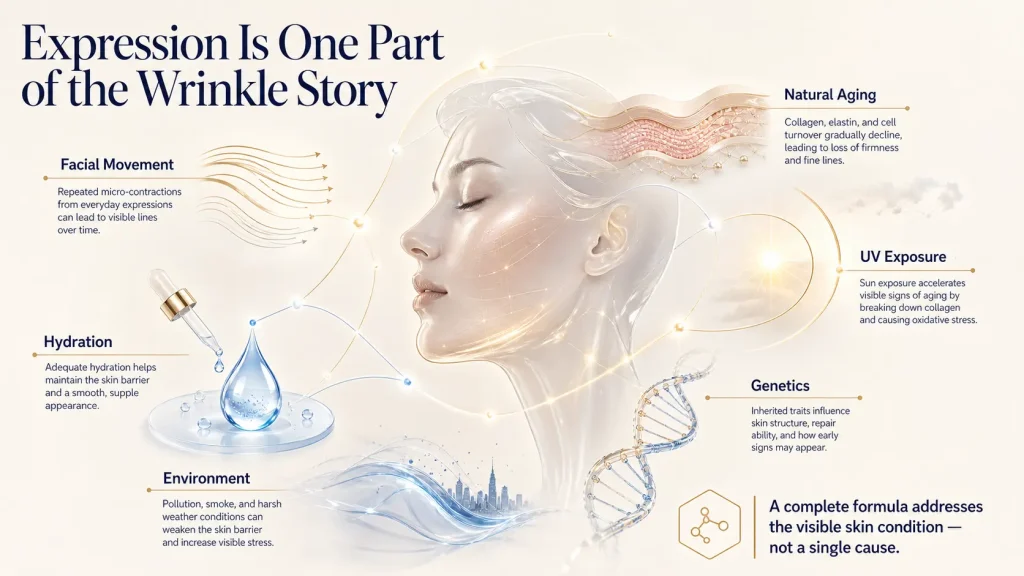
No. Saying that facial expressions cause wrinkles is only part of the explanation. Natural aging changes skin thickness, moisture retention, fat distribution and structural support. UV radiation accelerates photoaging and damages collagen and elastin. Smoking, pollution and genetic differences can also affect how and when wrinkles become visible.[1][2][3]
Dry skin does not create every deep wrinkle, but dehydration can make superficial lines look more pronounced. Likewise, repeated facial movement may help determine the location and direction of a crease, while the surrounding skin condition influences how persistent that crease becomes.
This multi-factor view is more useful for formulation. It prevents one ingredient, one pathway or one lifestyle factor from being presented as a complete answer to facial aging.
Does Smiling a Lot Cause Wrinkles?
Smiling repeatedly folds the skin around the eyes and mouth, so it can influence the pattern of expression lines in those areas. However, smiling is not an isolated switch that determines whether someone will develop wrinkles. Skin characteristics, cumulative UV exposure, age, smoking, environment and genetics all affect the outcome.
A science-led brand should not turn this relationship into advice to suppress normal expression. The better message is that facial movement is natural, while daily photoprotection, appropriate moisturisation and realistic skincare support can address modifiable contributors and the visible condition of the skin.
What This Means for Expression-Line Skincare
An expression-line formula should be designed as a complete cosmetic system. Humectants and emollients can support hydration and a smoother surface appearance. Barrier-supportive ingredients can improve comfort. A lightweight serum or eye-care format may suit targeted application, while the sensory profile influences whether consumers use the product consistently.
An anti-wrinkle peptide can contribute a focused ingredient story, but claims still need to match the finished product’s evidence. In the United States, the FDA distinguishes appearance-focused cosmetic claims, such as making lines less noticeable through moisturisation, from claims intended to affect body structure or function.[6]
For brands, realistic wording includes “helps improve the appearance of expression lines,” “supports smoother-looking skin” and “designed for expression-line care.” Claims such as eliminating wrinkles, paralyzing muscles or replacing a prescription injectable cross a very different scientific and regulatory boundary.
Where Acetyl Hexapeptide-8 Fits
Acetyl Hexapeptide-8, CAS 616204-22-9, is a cosmetic peptide commonly positioned in expression-line and anti-wrinkle formulations. Skinkind Cosmetics offers the ingredient within the Genopep facial-care portfolio in powder and solution formats.[7]
Its most defensible role in this article is as part of an expression-line formulation concept, not as proof that a topical cosmetic reproduces an injectable mechanism. An in vitro penetration study using human cadaver skin found that most applied Acetyl Hexapeptide-8 was removed from the surface or remained mainly in the stratum corneum; none was detected in the dermis under the study conditions.[5]
That evidence does not prove that every finished product behaves identically, but it does show why brands should avoid simplified claims about reaching facial muscles. Formula base, ingredient form, effective peptide content, stability, packaging and finished-product substantiation all need separate evaluation.
For project planning, teams can review the Acetyl Hexapeptide-8 product page and discuss whether a powder, solution or broader multi-peptide concept best fits the intended format and claim strategy.
Conclusion
What causes expression lines is not simply “too much smiling.” Facial movement repeatedly folds the skin along recognizable paths. Whether those folds disappear quickly or remain visible for longer depends on the skin’s changing ability to release and rebound, together with age, UV exposure, hydration, environment and genetics.
For skincare development, the strongest approach combines realistic consumer education, a complete formula and appearance-focused claims. Acetyl Hexapeptide-8 can support an expression-line concept when its product form, effective content, stability and finished-formula evidence are handled carefully.
Frequently Asked Questions
Why do facial expressions cause wrinkles?
Facial expressions repeatedly fold the skin in the same locations. At first, these lines may be visible only during movement. As elasticity, hydration and structural support change, the skin may rebound less completely and some folds may remain visible at rest. Facial expression is one contributor; aging, UV exposure and other factors also matter.
Do expression lines turn into wrinkles?
Some expression lines can become more persistent over time, particularly where repeated folding overlaps with reduced skin rebound. However, not every expression line becomes a fixed wrinkle, and there is no universal timetable. Skin characteristics, UV exposure, hydration, smoking, environment and genetics influence the progression.
Are expression lines wrinkles?
Expression lines are a type of visible skin line associated with facial movement. They may initially appear only when a person smiles, squints or frowns. The broader term “wrinkle” also includes persistent lines and creases caused by multiple age-related and environmental factors, so the terms overlap but are not always identical.
Can smiling a lot cause wrinkles?
Smiling repeatedly folds the skin around the eyes and mouth and can influence where expression lines appear. It is not the sole cause of wrinkles, and normal expression should not be treated as a harmful habit. Age, skin characteristics, UV exposure, smoking, environment and genetics all affect how persistent lines develop.
CTA
Explore Acetyl Hexapeptide-8 for expression-line skincare formulation concepts.