Professional Cosmetics Peptide Supplier | GENOPEP



News
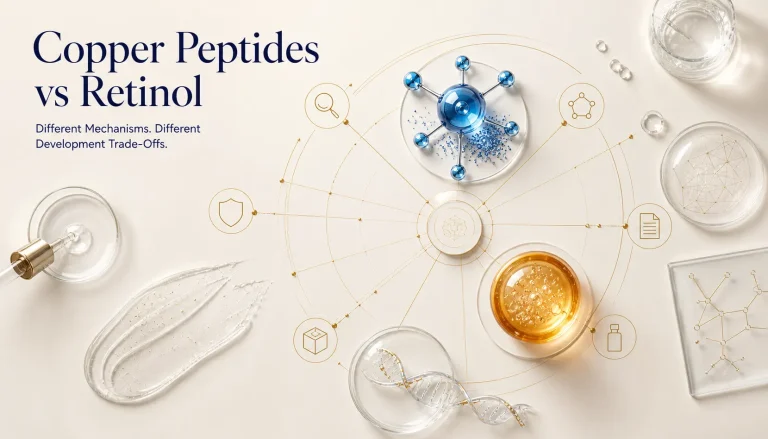
Copper Peptides vs Retinol: Mechanisms, Benefits, and Product-Development Trade-Offs
Copper peptides and retinol are not interchangeable anti-aging ingredients. Retinol has the stronger direct clinical evidence base for visible photoaging endpoints, while Copper Tripeptide-1 is supported mainly by ingredient-level, cell, preclinical, safety,…
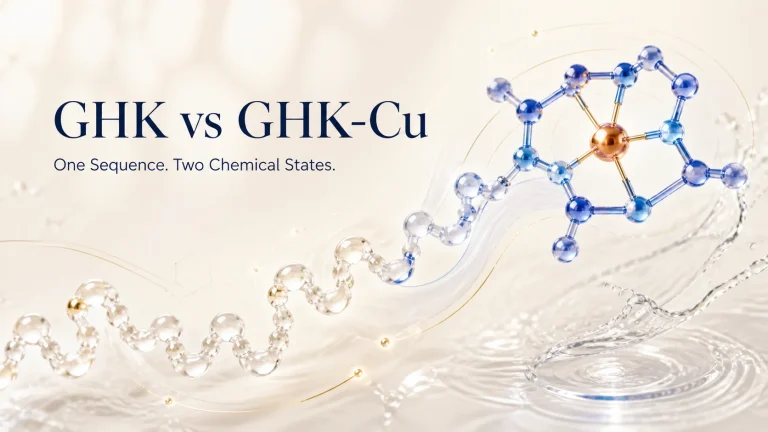
GHK vs GHK-Cu: What Changes When the Tripeptide Binds Copper?
GHK is the tripeptide Gly-His-Lys, while GHK-Cu is its copper complex, identified in cosmetics as Copper Tripeptide-1. When GHK binds copper, the peptide sequence remains GHK, but the material gains a different…
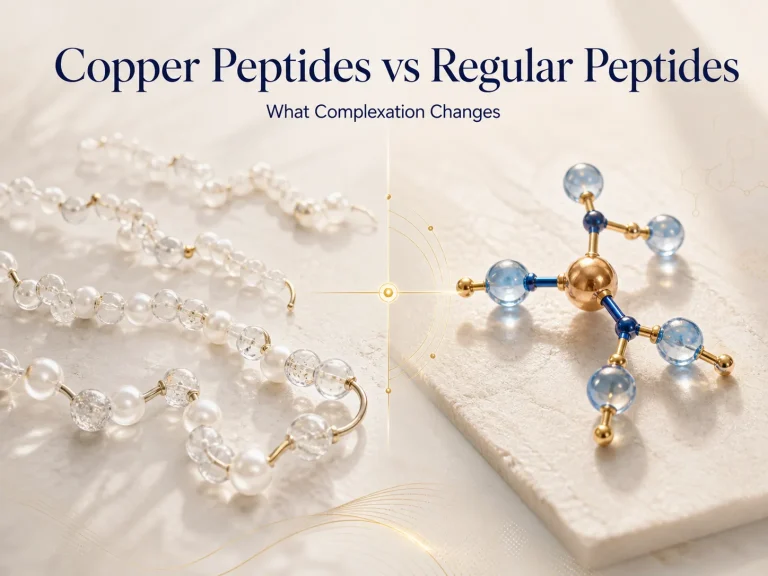
Copper Peptides vs Regular Peptides: What Does Copper Complexation Change?
Copper peptides differ from “regular peptides” because a peptide ligand is coordinated to copper, creating a chemically distinct metal–peptide complex. In Copper Tripeptide-1, copper is complexed with the Gly-His-Lys sequence. Complexation can…
What Does Copper Tripeptide-1 Do for Skin? Evidence, Benefits, and Claim Boundaries
What does Copper Tripeptide-1 do for skin? It is a copper-complexed tripeptide used as a skin-conditioning ingredient and studied in models involving extracellular-matrix turnover, oxidative stress, and inflammatory signaling. These findings create…
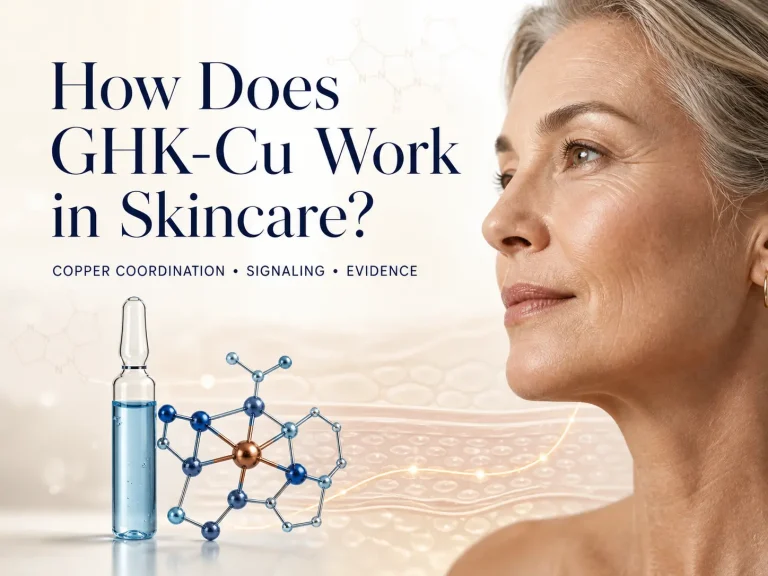
How Does GHK-Cu Work in Skincare? Understanding Copper-Peptide Signaling
How does GHK-Cu work in skincare? GHK-Cu is a copper-complexed tripeptide studied for copper binding and signals associated with extracellular-matrix turnover, oxidative stress and inflammatory responses. These mechanisms provide a formulation rationale,…
Are Peptides Good for Aging Skin? How to Read Anti-Aging Ingredient Claims
Are peptides good for aging skin? Some topical peptide formulas may improve defined cosmetic endpoints such as hydration, wrinkle appearance or perceived firmness, but “peptides” are not one interchangeable active. Results depend…
Can Sagging Skin Become Firmer Again? Realistic Expectations for Cosmetic Care
Can sagging skin become firmer again? Topical skincare can improve hydration, texture, fine lines and the appearance or feel of firmness, especially when dryness and photodamage contribute to the concern. It cannot…
What Are Copper Peptides in Skincare? Benefits, Evidence, and Limits
Copper peptides are coordination complexes in which a short peptide binds copper. In skincare, the best-known example is GHK-Cu, commonly identified in cosmetic ingredient nomenclature as Copper Tripeptide-1. Laboratory, preformulation and limited…
How Does Skin Repair Itself? A Simple Guide to Renewal and Barrier Recovery
Skin repairs itself through several coordinated processes. Basal keratinocytes continually generate new epidermal cells, differentiating cells build the stratum corneum, and barrier lipids reorganize around corneocytes to limit water loss and outside…

What Causes Skin to Lose Firmness? Collagen, Elastin, and the Visible Signs of Aging
Skin loses firmness when aging and cumulative environmental exposure reduce collagen production, fragment existing collagen, and alter the elastic-fiber network that helps skin recover after stretching. Dehydration can make lines and laxity…

Does Acetyl Hexapeptide-8 Really Work? Clinical Evidence, Delivery Limits and Realistic Claims
Does Acetyl Hexapeptide-8 really work? Specific formulas have improved peri-orbital wrinkle measurements in controlled human studies, but the evidence does not prove that every Argireline serum, concentration or delivery system produces the…
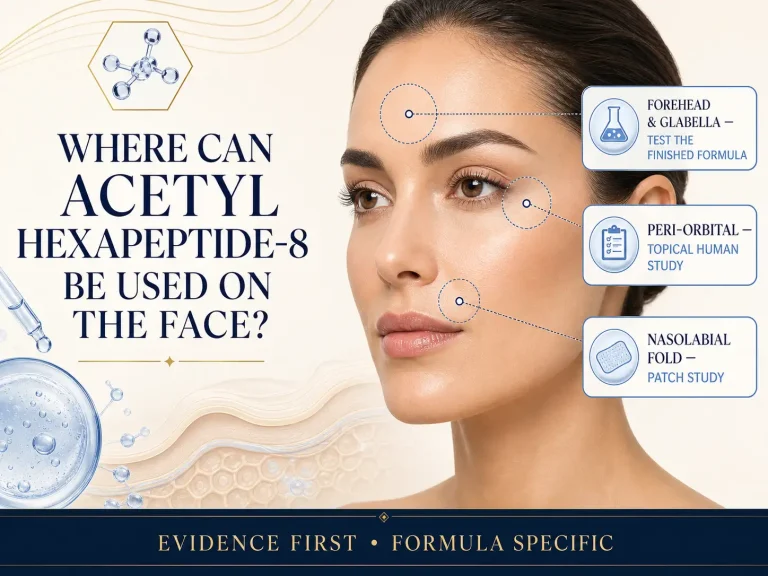
Where Can You Use Acetyl Hexapeptide-8 on the Face? Target Areas and Formulation Considerations
Where can you use Argireline on the face? Published Acetyl Hexapeptide-8 evidence most directly covers peri-orbital wrinkles, while a microstructure patch study also evaluated nasolabial folds. Forehead, glabellar, mouth-area and full-face use…