Professional Cosmetics Peptide Supplier | GENOPEP



News
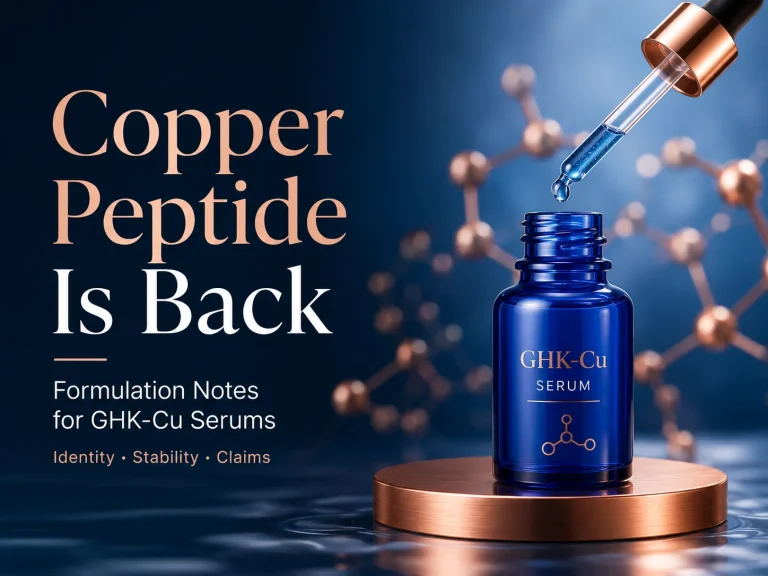
Copper Peptide Is Back: Formulation Notes for GHK-Cu Serums
Copper peptide is back because it offers something rare in skincare marketing: a visible blue identity, a biotech-sounding ingredient story, and enough research history to feel more substantial than a seasonal claim.…
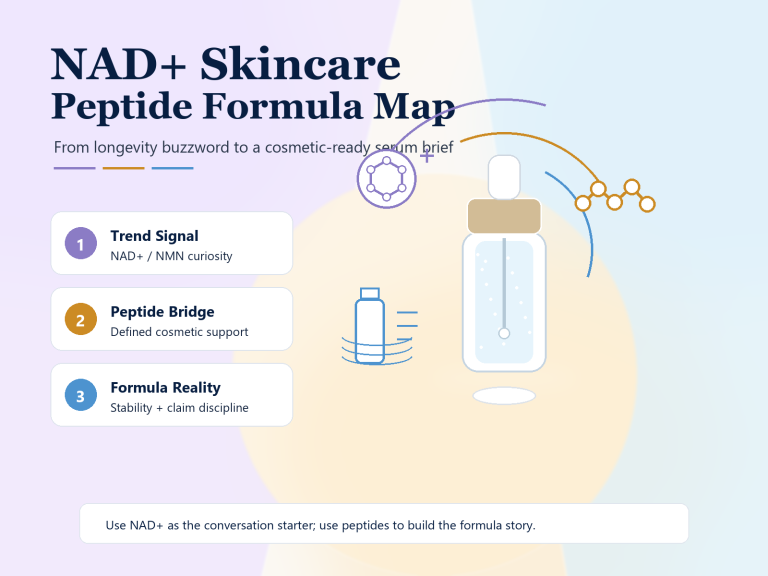
NAD+ Skincare Is Trending: Where Do Peptides Fit in Longevity Formulas?
NAD+ Skincare Is a Longevity Conversation, Not a Shortcut NAD+ skincare is trending because it borrows language from one of the biggest wellness conversations of the decade: cellular energy, longevity, mitochondrial function,…

The Peptide Summer of 2026: Why Pharmaceutical-Grade Standards Are Reshaping the Beauty Industry
Introduction The global skincare industry is entering what many professionals describe as the “Peptide Summer” of 2026. As consumer expectations continue to rise, beauty brands are no longer focused solely on marketing…
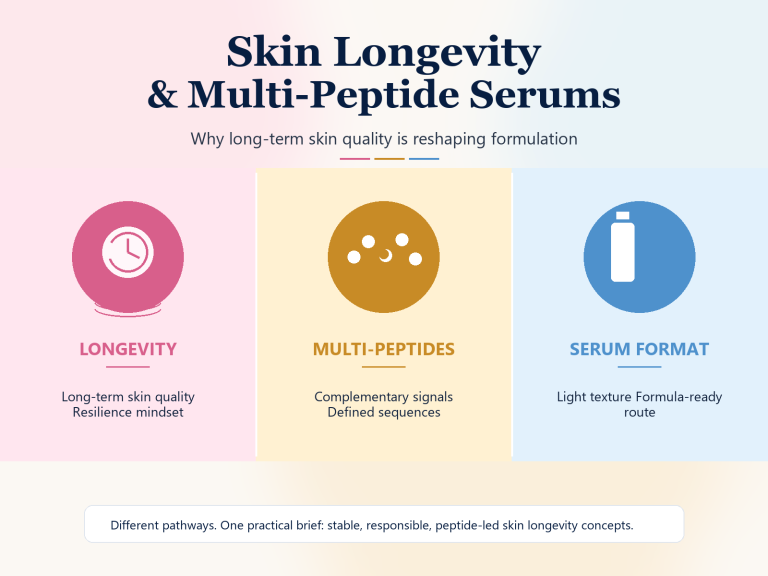
Why Skin Longevity Is Making Multi-Peptide Serums More Relevant in 2026
Skin Longevity Is Changing the Skincare Brief Skin longevity is becoming a more useful phrase than traditional anti-aging because it points to long-term skin quality, not only wrinkle correction. In 2026, professional…
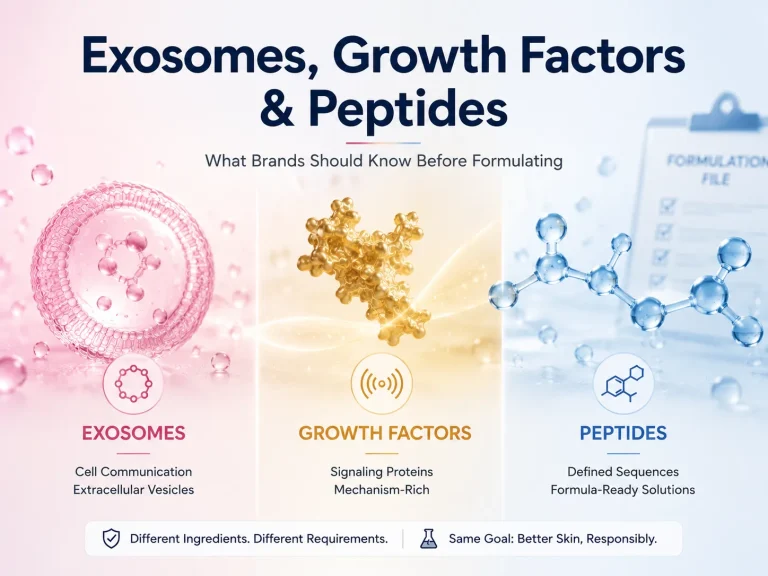
Exosomes, Growth Factors, and Peptides: What Brands Should Know Before Formulating
Why Exosome Skincare Is Getting Attention Exosome skincare has become one of the most searched regenerative-beauty ideas because it sounds advanced: cell communication, extracellular vesicles, growth-factor-like signaling, and post-procedure skin recovery. For…
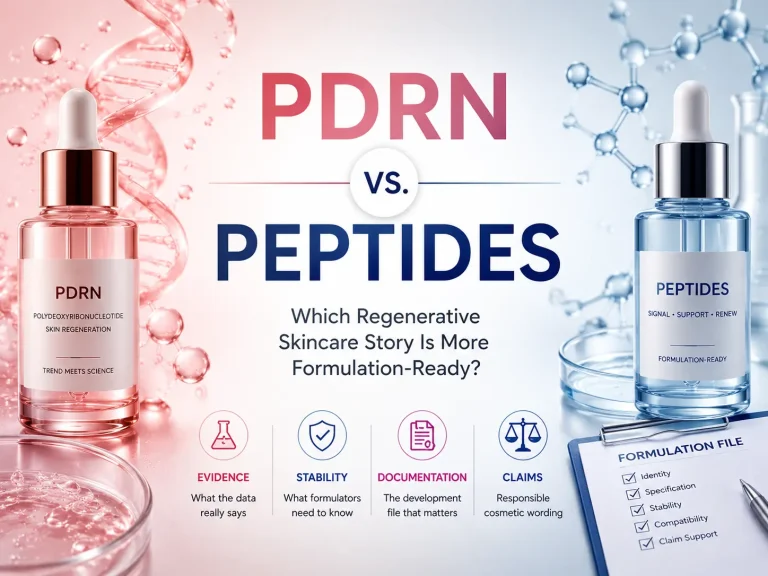
PDRN vs Peptides: Which Regenerative Skincare Story Is More Formulation-Ready?
Why PDRN Suddenly Became a Skincare Keyword PDRN has moved quickly from aesthetic-medicine conversations into everyday skincare search. Beauty media now treats polydeoxyribonucleotide, often described as DNA-derived fragments, as part of the…
GLP-1 Era Skincare: Can Peptides Help Support Firmer-Looking Skin?
GLP-1 skincare is not really about putting a weight-loss drug story into a cream. For cosmetic brands, the search demand starts with phrases like “Ozempic face,” but the formulation question is more…
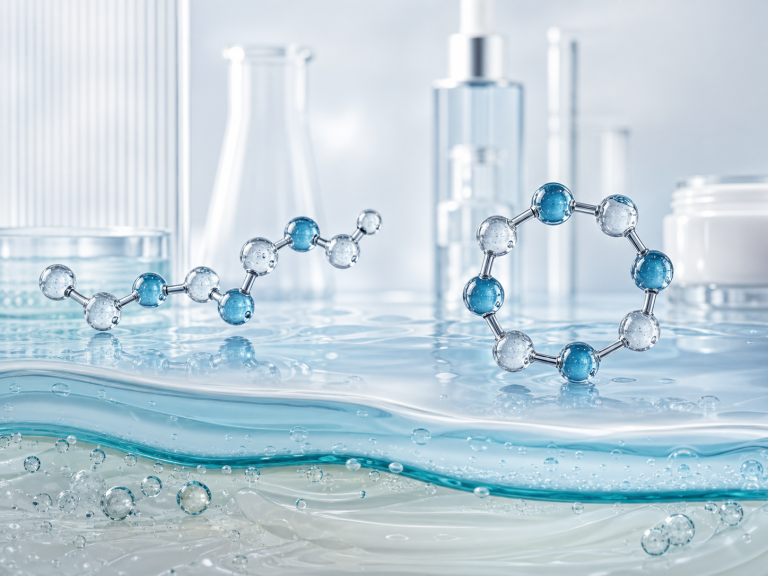
Cyclic vs Linear Peptides in Complex Formulas: What a Stability Experiment Really Shows
A peptide chain looks vulnerable; a peptide ring looks protected. That visual intuition is one reason cyclic peptides attract attention in cosmetic R&D. Yet the famous stability advantage of cyclization usually refers…
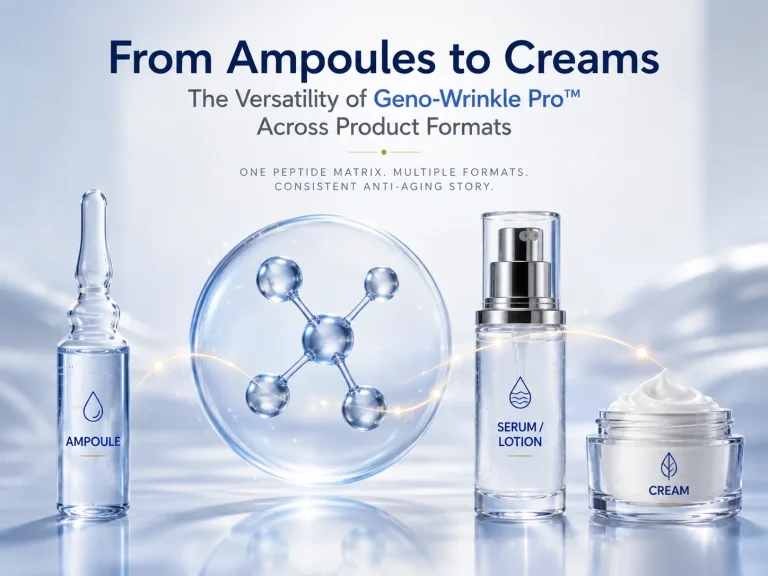
From Ampoules to Creams: The Versatility of Geno-Wrinkle Pro™ Across Product Formats
The Challenge of Multi-Format Integration in Modern Skincare In the 2026 global skincare market, brands are increasingly moving toward modular product lines, where a single high-performance technology is deployed across multiple formats,…
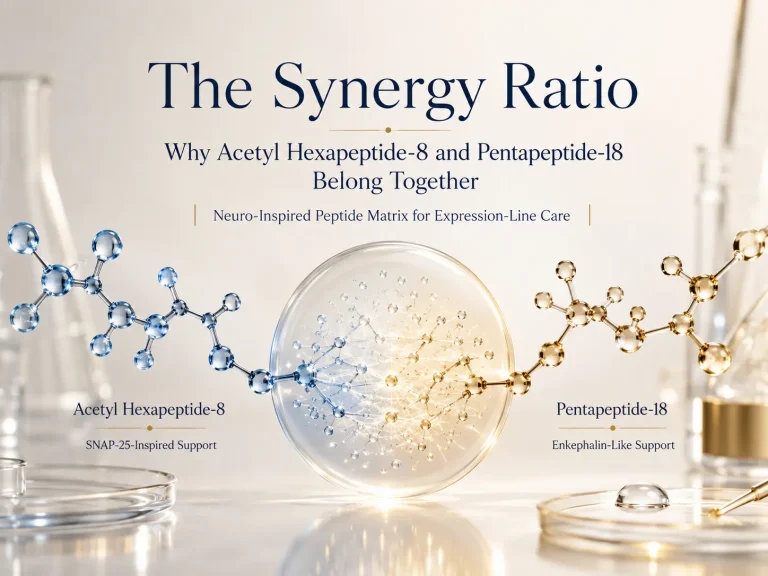
The Synergy Ratio: Why Acetyl Hexapeptide-8 and Pentapeptide-18 Belong Together
The Neuro-Architecture of Wrinkles: Understanding the Synaptic Transmission In the professional dermatological science of 2026, the formation of dynamic wrinkles is understood as a direct consequence of repeated, high-frequency facial muscle contractions…
Beyond the Needle: How Peptides Are Reframing the “Botox Fatigue” Market
The Rise of “Botox Fatigue” in 2026 For over two decades, botulinum toxin type A has been one of the most recognised professional solutions for expression line reduction. According to the International…
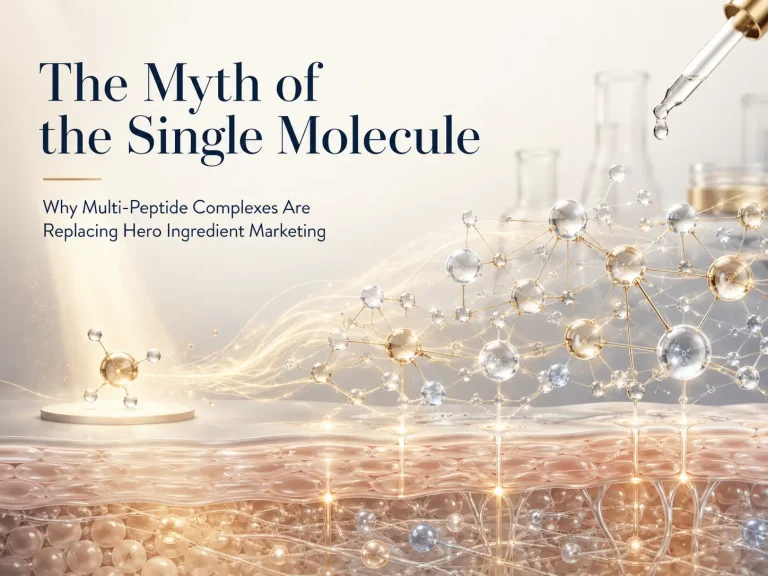
The Myth of the Single Molecule: Why Multi-Peptide Complexes Are Replacing Hero Ingredient Marketing
The Myth of the Single Molecule For over a decade, the global skincare industry was built on what we now recognize as a convenient myth—the “Hero Ingredient” narrative. Whether it was a…